Customers report 5 to 10x developer productivity with CoderFlow, and the teams that get there change how they work, not just which tools they use. Developers shift from writing every line to directing agents and reviewing verified results, acceptance criteria move upstream and smaller teams own outcomes. CoderFlow handles the execution; your organization has to be ready to direct it.
Why Teams Hit a Wall With AI Coding
Most teams adopt AI coding tools expecting the same processes and roles, just faster. Individual productivity jumps, and then many teams hit a wall: more code gets written, but review queues grow and releases don't speed up.
Fiona Chen and James Stratton studied this in a job market paper from Harvard University, not yet peer reviewed, using Jellyfish data from 655 firms. After firms adopted AI agents, the time from a change's review submission to its approval rose 56.1%, and comments per change rose 38.6% (Chen and Stratton, Harvard University, November 2026). It's a signal that the human system needs to evolve.
What Makes CoderFlow Different
Today's coding agents already build, test and fix their own code. CoderFlow runs those agents and takes on everything after the code: verification against your systems, judging, review with evidence and a record of every approval.
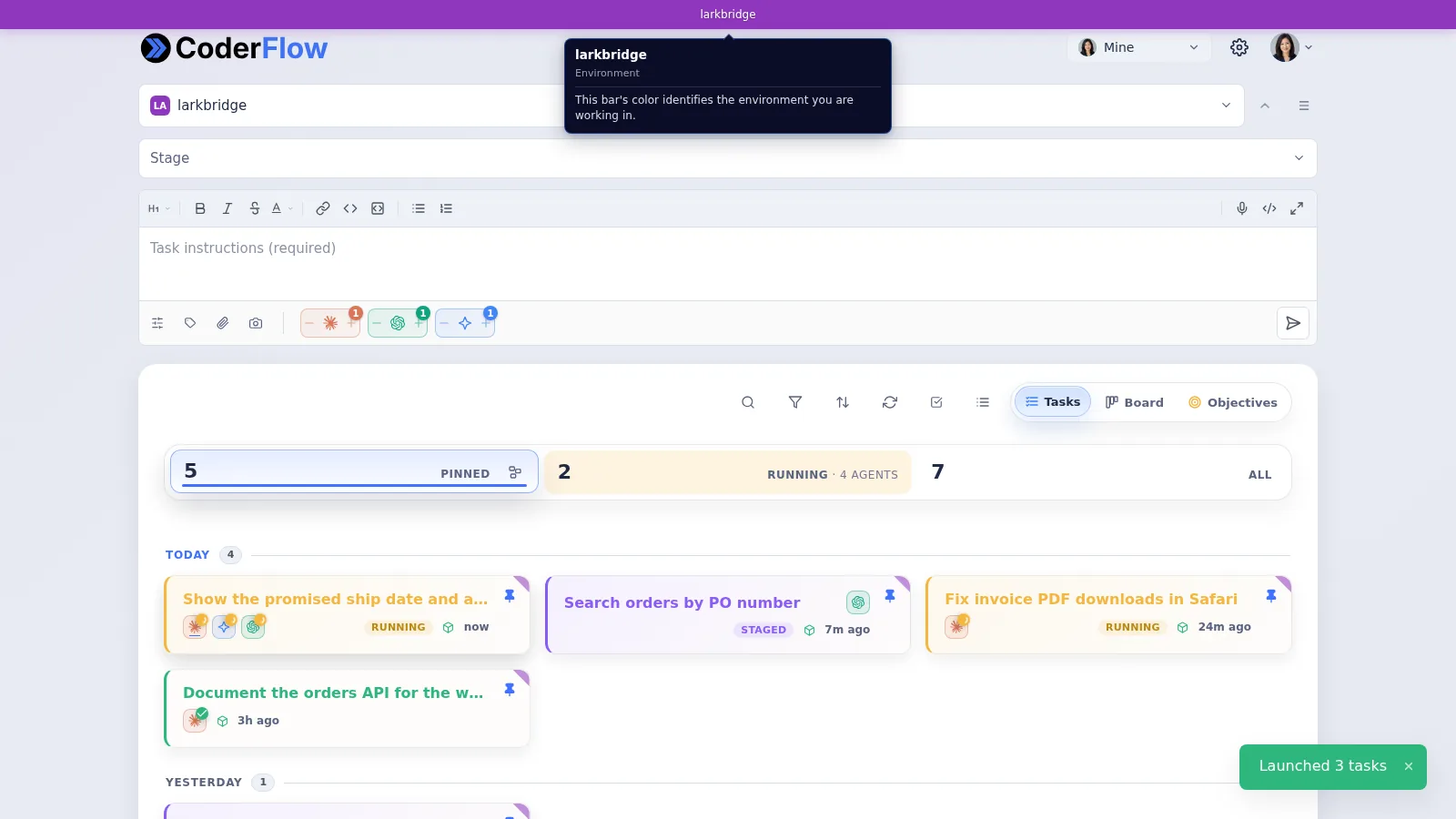
- Complete engineering cycles in isolated containers, with your toolchain where it's available.
- Runs inside your infrastructure when self-hosted, with code going only to the AI provider IT configured.
- Multi-model and parallel agents: select the strongest of several results, while many agents work on independent tasks.
- Validated results with governance: developer review stays the control point.
See agentic coding with CoderFlow.
What Success With CoderFlow Looks Like
Engineers Shift From Writing Code to Orchestrating Work
Engineers spend more time defining constraints and acceptance criteria, breaking work into parallel tasks and reviewing validated changes. This isn't less engineering. It's higher-leverage engineering.
Business and Engineering Move Closer Together
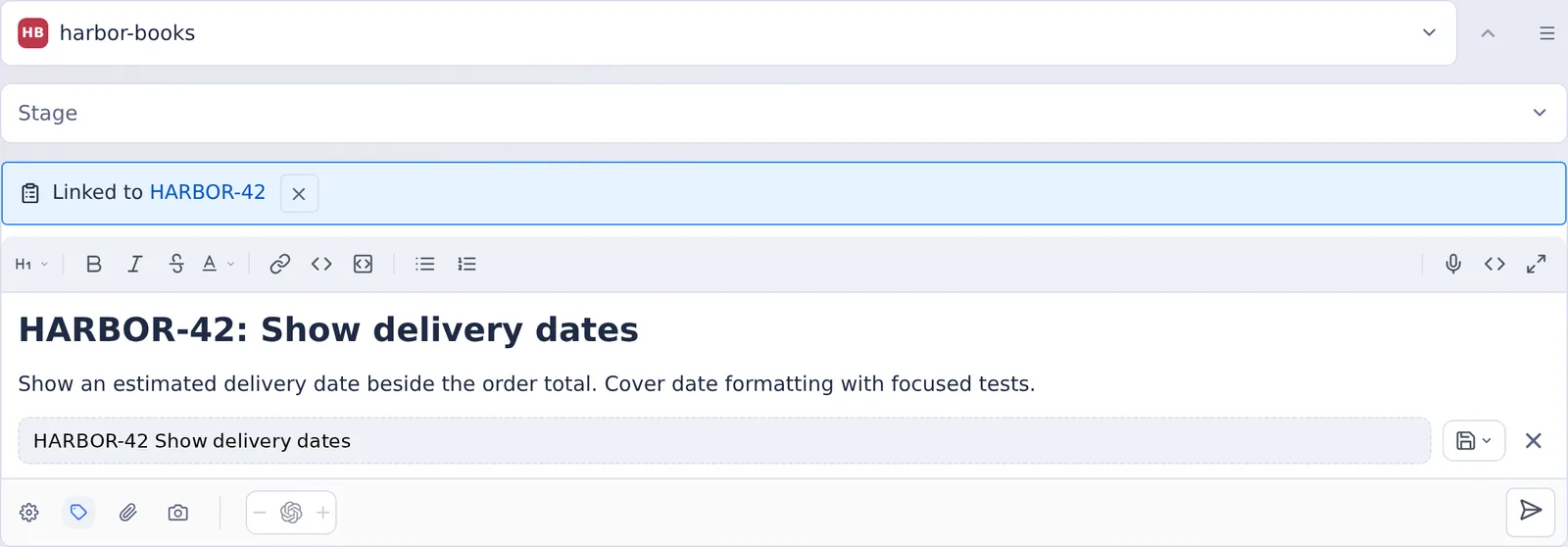
Business users keep describing what they need in familiar tools like Jira. When requests include clear goals and acceptance criteria, developers add technical context and CoderFlow takes over execution, which is what IT Requests in CoderFlow are built for.
Teams Get Smaller and More Capable
The strongest results come from smaller groups with clear ownership and fewer handoffs. Agents handle execution at scale; people focus on direction and quality.
Governance Evolves Instead of Disappearing
Teams encode standards into templates and workflows and review results instead of effort. CoderFlow supports this with task history and audit trails, role-based access, standardized environments and validation before any change is committed.
For Developers: From Implementation to Orchestration
You spend less time on repetitive work and more on architecture, constraints and the intricate work that truly needs a human. On custom systems such as COBOL, PowerBuilder or Visual FoxPro, your existing team can hand refactoring or logic updates to agents and review the results before anything is committed.
Adoption Has a Learning Curve, and That's Normal
Almost every successful rollout moves through experimentation in weeks 1 to 2, adjustment in weeks 3 to 4, new orchestration habits by weeks 5 to 8 and a new normal from month 3. Hands-on enablement in the first sprints makes an outsized difference.
Measure Outcomes, Not Usage
Track cycle time from submission to production, backlog velocity, cost per feature delivered and how much developer time goes to architecture.
The Path Forward
A typical journey runs from discovery to a proof of concept, a phased rollout inside your infrastructure and sustained delivery, where agents connected to Jira post validated results back for approval. Some customers now ship application enhancements the same day they're requested.
The technology is ready; our job together is to make sure the human side is ready too. Talk to sales or start with a Reimagine engagement.
Questions
Will AI Coding Agents Replace the Developers Who Know Our Custom Systems?
With CoderFlow, developers stay in charge: agents take on building, testing and fixing, while developers define goals and acceptance criteria, architect solutions and approve every change. Their system knowledge can be captured in skills and environment memory so every agent follows it.
How Long Does It Take a Team to Adapt to Agentic Development With CoderFlow?
Most teams settle into a new rhythm with CoderFlow in about two to three months, moving from experimentation and process adjustment to a new normal from month 3. Hands-on enablement in the first sprints makes the biggest difference.
How Can a Team Measure the Impact of CoderFlow Agents?
CoderFlow's usage dashboard reports tasks, success rate, lines changed and duration by status, environment, user and source, plus per-task token usage. Pair those with your own outcome measures, such as cycle time from request to production, backlog velocity and developer time spent on architecture versus routine work.