How CoderFlow Is Secured.
AI your security team can sign off on: IT sets the rules, every task runs in its own container, and a person approves every change.
IT Chooses the AI
IT picks the providers and models, per environment, and sets the guardrails.
Humans Approve
People review and approve before anything ships.
Isolated Containers
Every task runs in its own container with least-privilege access.
Short-Lived Git Access
Containers get a short-lived token for each Git operation, never long-lived Git credentials.
SSO and MFA
Microsoft Entra ID, Okta, Google Workspace or any OIDC provider, plus MFA.
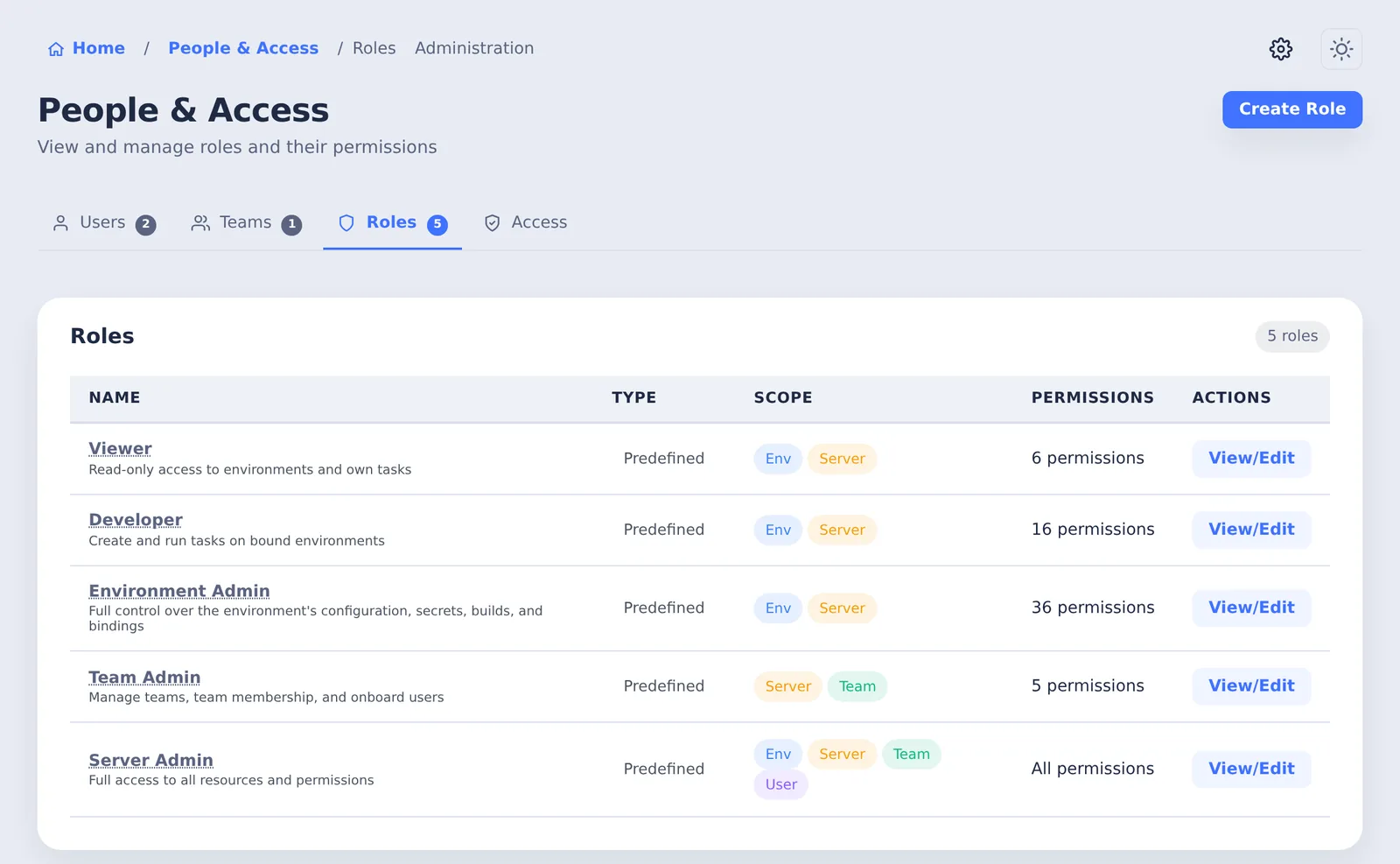
Role-Based Access
Roles and permissions per environment and per capability.
Encrypted Secrets
Stored secrets are encrypted at rest. Business users' saved logins are write-only and never reach the AI.
Your Infrastructure or Hosted
Run CoderFlow on your own Linux server with Docker, or have Profound Logic host it on CoderFlow Cloud.
Full Traceability
Every change traced from request to agent to approver to deployment.
Want agents to work on your own security? See scheduled sweeps, checks on every change and alert triage.
Security With AgentsWhat Agents Can Reach, Do and Ship.
IT defines which data agents can access, which actions they can perform, and when a person must approve the next step.
Which Data and Applications Can an Agent Reach?
Only the repositories, connections, MCP servers and secrets IT adds to its environment. Where a connection supports personal logins, business users' queries run with their own login, narrowed by the data access rules IT sets.
Which Actions Can It Perform?
Roles set who can ask, build, approve and deploy in each environment. Answers and reports only read data. Each task runs in its own isolated container, with short-lived Git access.
Which Actions Need a Person's Approval?
Every code change is committed only after a person approves it, as a commit, a branch or a pull request. Protected branches stay protected.
What Can the Team Inspect Afterward?
Each task keeps its conversation, changes, test results and approver. Automations keep a run history, and each commit links back to its task.
How Work Flows, Safely
With CoderFlow hosted by Profound Logic, systems in your office or data center connect through secure connections your IT team approves.
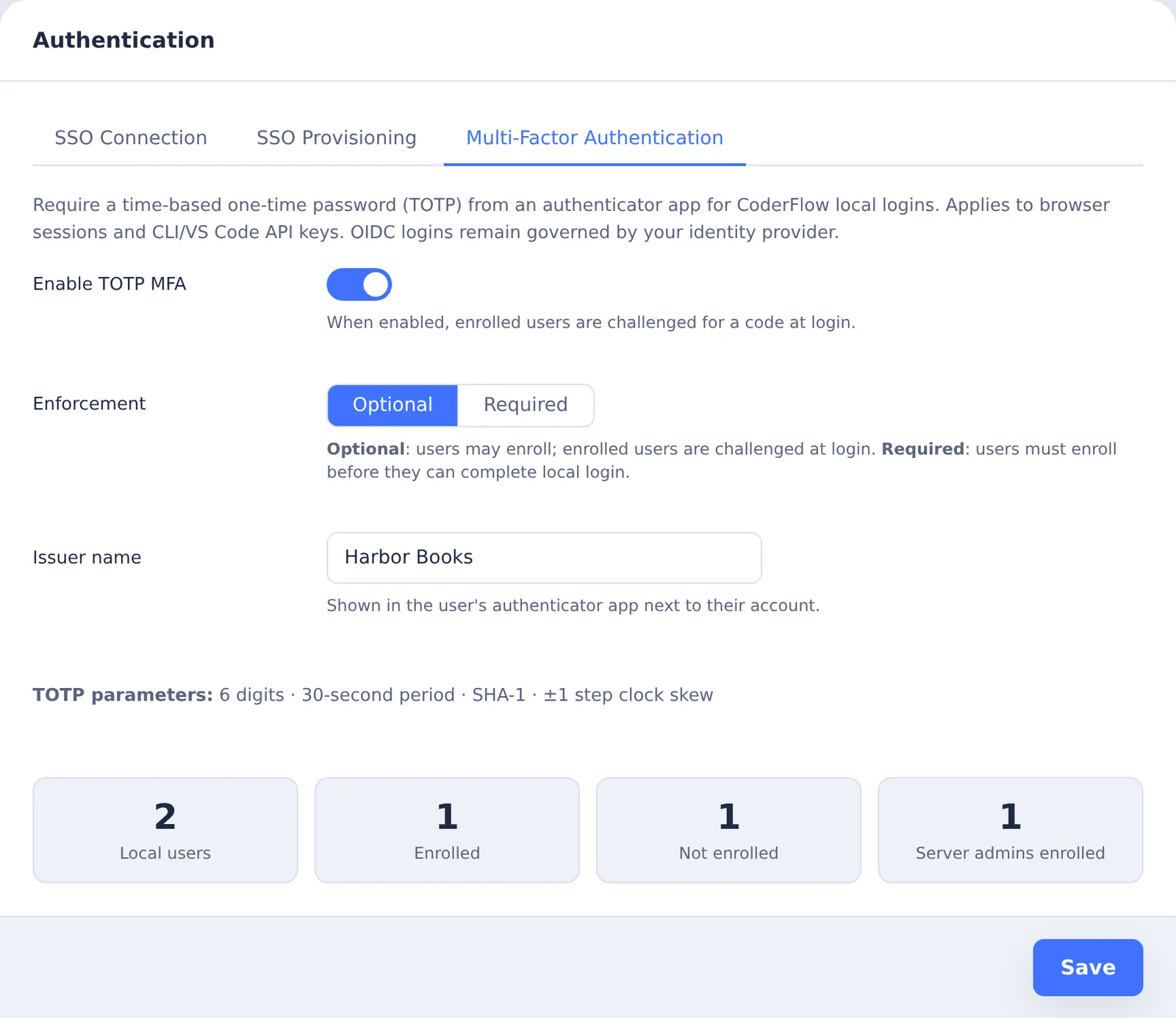
Identity You Already Run
Sign in with your identity provider, require MFA and see enrollment at a glance.
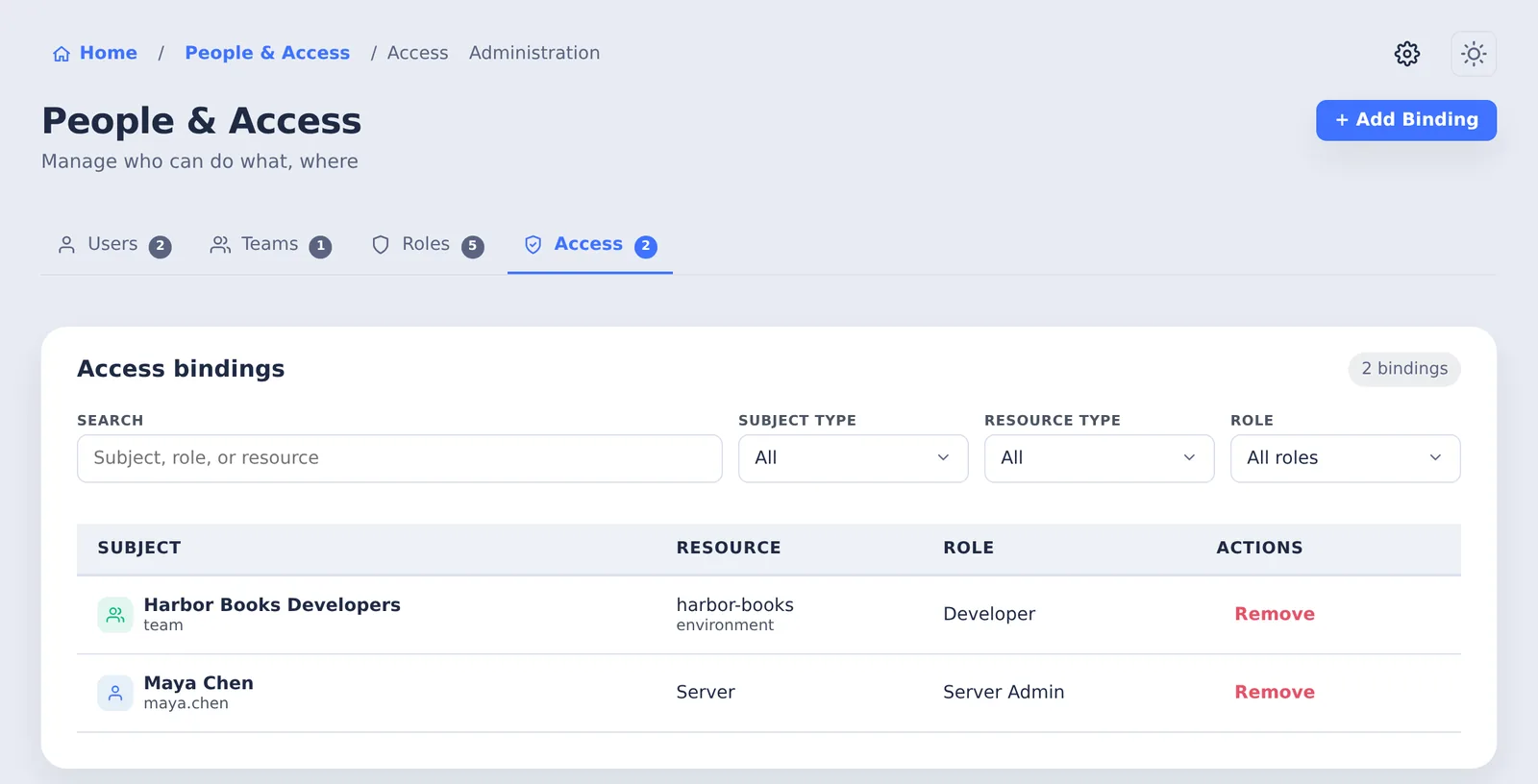
Access per Team and Environment
Bind teams to roles on each environment. Business users can't create environments, change connections or see other people's private work.
Your Code and Data Go Only Where IT Sends Them.
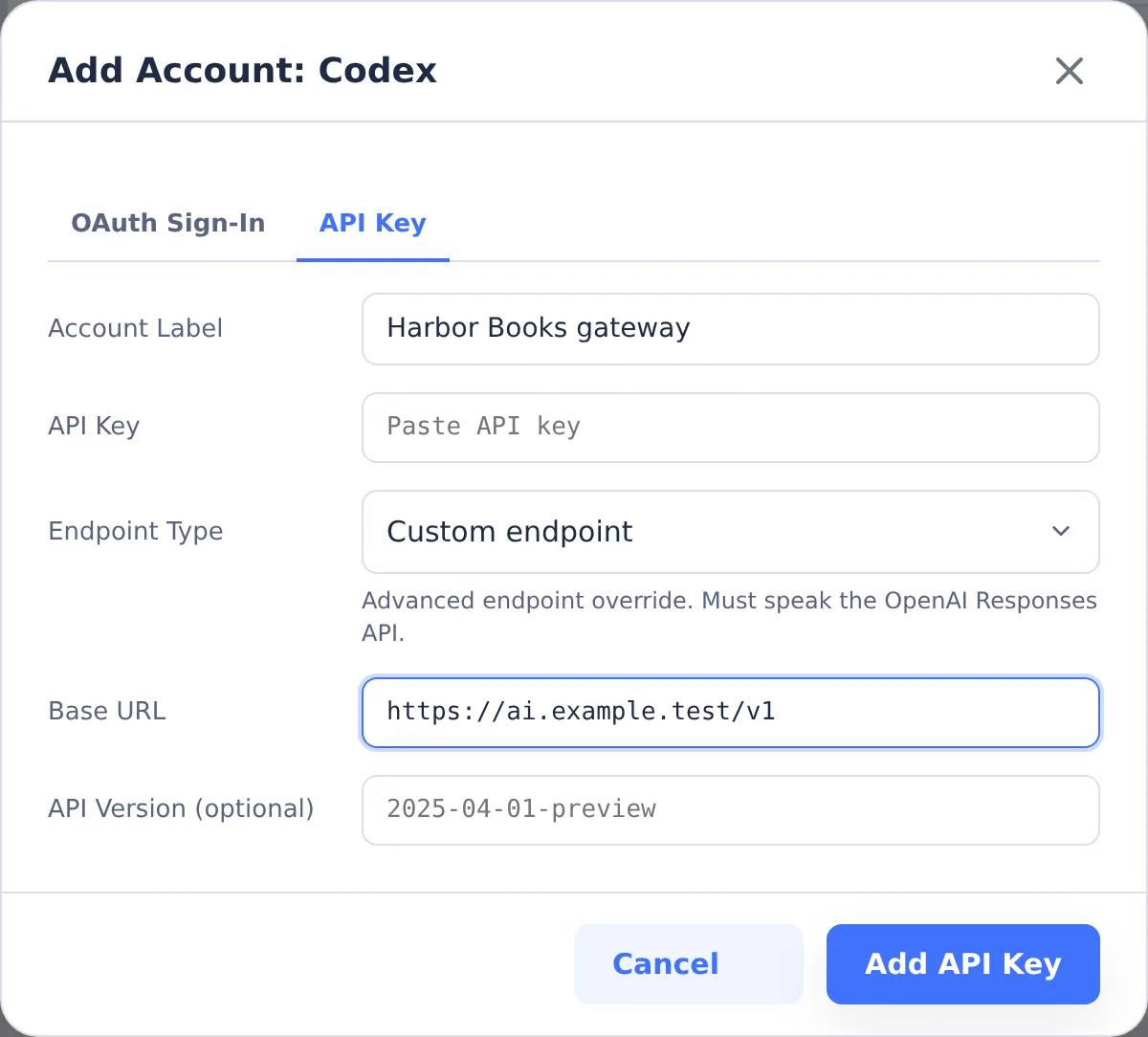
What an agent reads goes only to the AI provider IT configured for that environment, or to your own gateway. Choose provider accounts with the data terms you need.
- IT chooses the AI providers, accounts and models for each environment
- Ask CoderFlow usage data is off by default, and everyone can see when it's on
- Stopped task containers are removed after 7 days by default
- Secret values show as [redacted] to people with view-only access
Keep CoderFlow off the Open Internet.
Run the server on a private network behind your VPN. Inbound integrations get their own listener.
- Container ports are reached only through the authenticated server
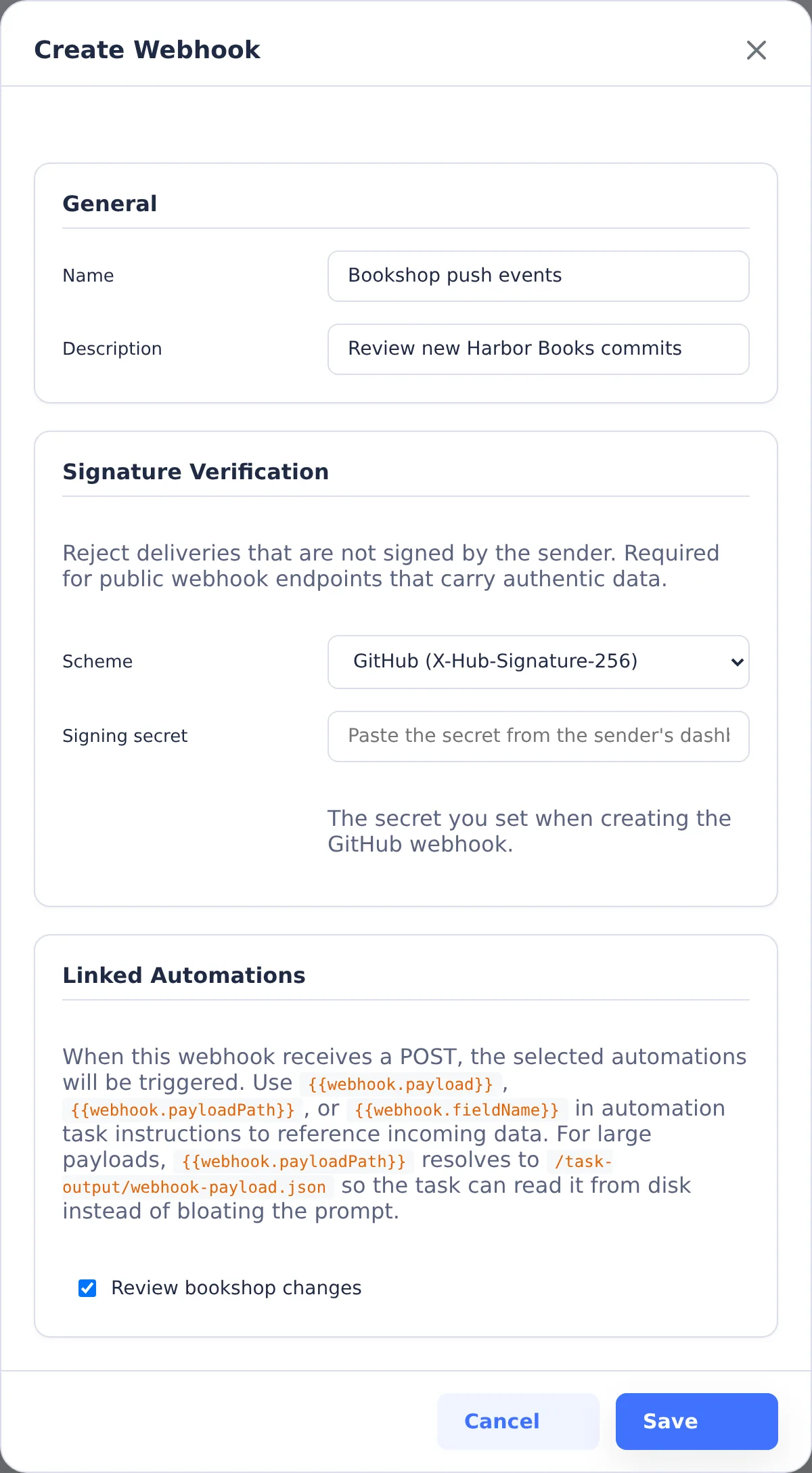
- A webhook-only listener, with HMAC-SHA256 signature checks
- Egress rules can block the metadata service and your internal network
- CPU, memory and process limits on every container by default
How CoderFlow Contains AI Mistakes and Prompt Injection.
An agent can misread a task, or be misled by text it reads. CoderFlow limits what an agent can reach and change without a person.
Semi-Trusted Containers
Each task runs in its own container, treated as if it could run hostile code: resource limits, no published ports and only the connections its environment provides.
Least Privilege by Default
Use read-only database logins and least-privilege accounts. Automation-only connections are never put in a task container, and deployment secrets stay in deployment profiles.
Untrusted Input Stays Untrusted
Email that starts a task is marked as untrusted input, and work started from a mailbox runs as a private, pinned task for its owner to review.
Approval Before Commit
Nothing an agent changes reaches your repositories until a person approves it. Protected branches stay protected.
Permission to Deploy
Deployments run through steps IT defines, and running one takes permission. Every run is recorded.
New Dependencies Are Visible
Packages an agent adds appear in the diff a person approves, and a scheduled check can run your dependency auditor on every change.
What CoderFlow Doesn't Do Today.
Security reviewers ask, so here it is plainly.
- Sign-in uses OIDC (Microsoft Entra ID, Okta, Google Workspace and others). SAML and SCIM aren't supported today.
- There's no fully offline (air-gapped) option: task containers need outbound access to AI providers, Git hosts and package registries.
- There's no built-in egress allowlist; use your firewall rules, as the hardening guide shows.
- There's no export to a SIEM, and a permissions audit log is on the roadmap.
- CoderFlow doesn't list compliance certifications today. Talk to us about your questionnaire.
For Your Security Reviewer
Secrets and Passwords
Stored secrets are encrypted at rest with AES-256-GCM, and local passwords are hashed with bcrypt. Saved credentials are never sent back to the browser. Containers get a short-lived credential for each Git operation instead of long-lived Git credentials.
Sign-In
OIDC single sign-on with Microsoft Entra ID, Okta, Google Workspace or another OIDC provider, an SSO-only mode, and MFA that admins can require for everyone.
Roles
Predefined roles plus custom roles, bound per environment. Delegated administrators can't grant more access than they have.
Containers
One container per task, with CPU, memory and process limits on by default (each container gets at most half the host's CPUs and memory unless an admin sets other limits, and 512 processes). Published ports are bound to 127.0.0.1 behind the authenticated server.
If a Container May Be Compromised
The hardening guide has a runbook: stop the container but keep it, rotate every credential it could reach, check the host for unexpected processes and connections, and re-verify network exposure from outside.
Security Questions
Where Does CoderFlow Run?
On a Linux server with Docker, on-premises or in your cloud, or hosted by Profound Logic. Self-hosted, all server data, task history and hosted repositories stay on your server, and AI calls go only to the providers IT configures. The server needs outbound internet access for AI providers, Git hosts and licensing.
Does Our Code Go to an AI Provider?
The code and data an agent reads while working are sent to the AI provider IT configured for that task, such as Anthropic, OpenAI or Google, or to your own gateway (for example Amazon Bedrock or Azure OpenAI) or a self-hosted model. IT decides which provider accounts exist, and a provider with no account can't be used.
How Are Credentials Protected?
Task containers never hold long-lived Git credentials: a credential helper fetches a short-lived token for each Git operation, limited to the task's repositories. Stored secrets are encrypted at rest, passwords are hashed, and business users' saved logins are encrypted, write-only and never shown to the AI. Treat any secret you add to an environment as visible to that environment's agents.
What Sign-In Options Are Supported?
Local accounts with optional or required MFA using an authenticator app, or single sign-on through OpenID Connect with presets for Microsoft Entra ID, Okta and Google Workspace. Users can be created automatically on first SSO sign-in, and local sign-in can be turned off.
How Do We Control Who Can Do What?
Role-based access is assigned to users or teams per environment. Predefined roles include Viewer, Developer, Environment Admin, Team Admin and Server Admin, and admins can create custom roles. Delegated admins can only grant permissions they hold, which prevents privilege escalation.
How Do We See Who Changed What?
Every approval is recorded with who approved it, when, the commit message and the commits it produced. Each task keeps its full history (instructions, agent activity, conversation, logs and diff) even after its container is removed, and deployments are recorded in run history.
Do You Hold Compliance Certifications?
CoderFlow doesn't list compliance certifications today. It's built so IT stays in control: you choose where it runs and which AI providers it uses, access is role-based, a person approves every change, and history is kept. Talk to us about your requirements.
Bring Your Security Questionnaire.
Talk to us about your reviewers' questions, or download the one-page security overview to share.