
The business case for CoderFlow rests on team-level output, so measure it against the cost of added engineering capacity and the time major initiatives take, not against a coding agent subscription. Customers report 5 to 10x developer productivity, and one completed 14 months of planned work in about 2. The lowest-risk way to get there is to start with one real workflow that delivers a verified result, then expand as your team gains confidence.
This is Part 3 of our series, Orchestrated Execution for Enterprise Development with CoderFlow, on value, adoption and timing.
Understanding the Value Model
Coding agents such as Claude Code and Codex already write code very well. But on custom systems, developers still check each change against the real system, get it approved and release it, so the bottleneck is now everything after the code.
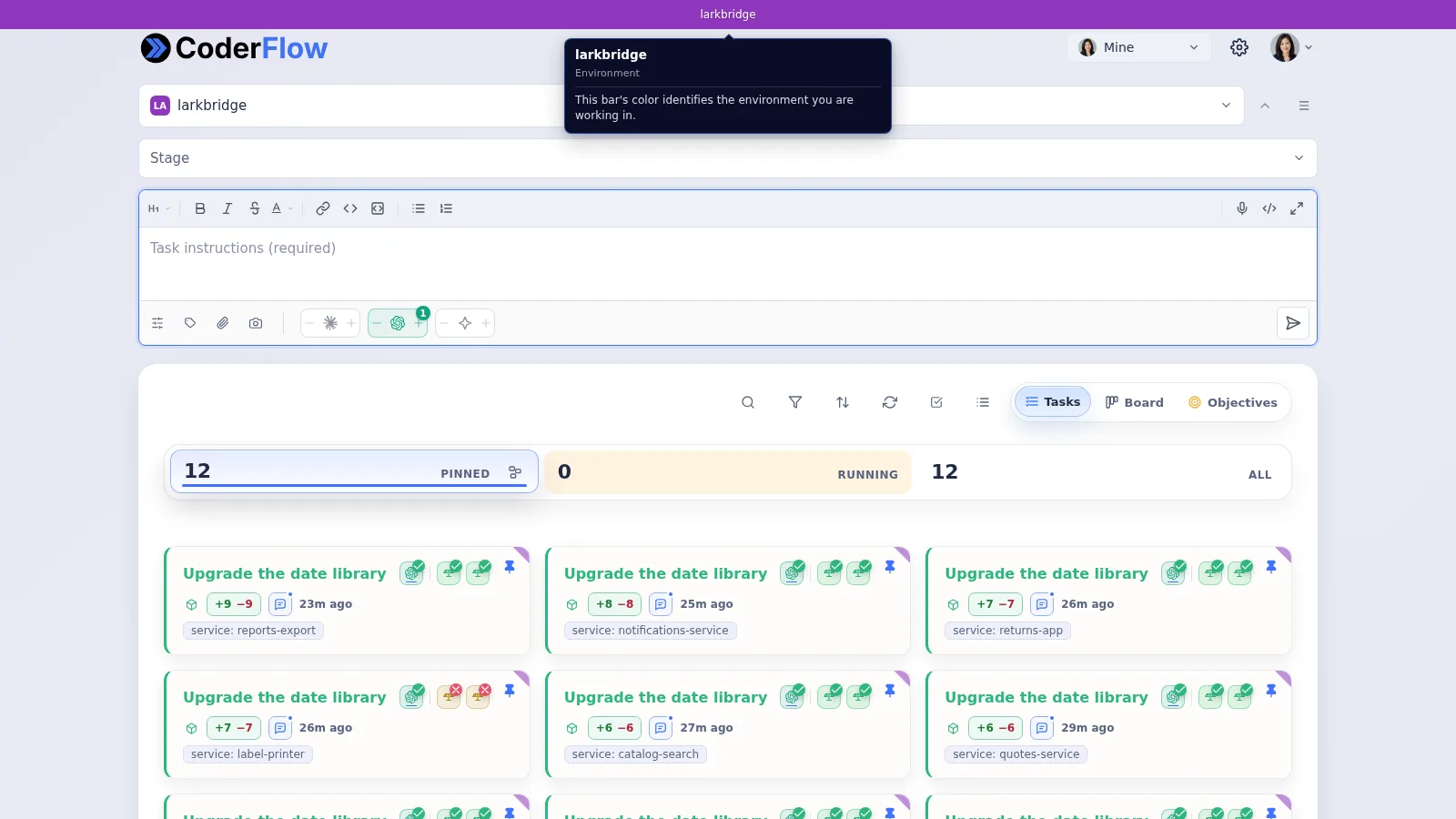
CoderFlow takes on that work with parallel, orchestrated execution. It plans the approach, runs the work across multiple agents, evaluates competing solutions with automated judges and iterates until validated outcomes are ready for approval. It works like a managed team of junior and mid-level engineers, testers and reviewers that your senior developers direct.
- Parallel throughput. Agents work many tickets at once, each in its own container.
- Safe execution. Agent work stays away from production systems until your team approves it.
- Depth on your platform. Built-in and custom skills cover browser testing with Playwright and the toolchains behind COBOL, PowerBuilder, OpenEdge and other systems where they're available.
- Repeatable scale. Templates define a pattern once and run it across many programs at the same time.
Measuring Value and Cost
Compare CoderFlow with the cost of hiring developers or an outsourced team, and track the capacity it adds and the timelines it shortens.
Pricing is predictable and not charged per line of code, and AI usage runs through the provider accounts your IT team connects. Professional services range from a focused onboarding to a starter engagement covering setup and enablement; see CoderFlow pricing for current options.
Staged Adoption: From First Task to Enterprise Scale
Successful teams show value early and expand deliberately.
- Start with one verified result. Complete one workflow with measurable results, such as refactoring a problem module in an Oracle Forms or Delphi application. A Reimagine engagement is one way to start with a real business problem.
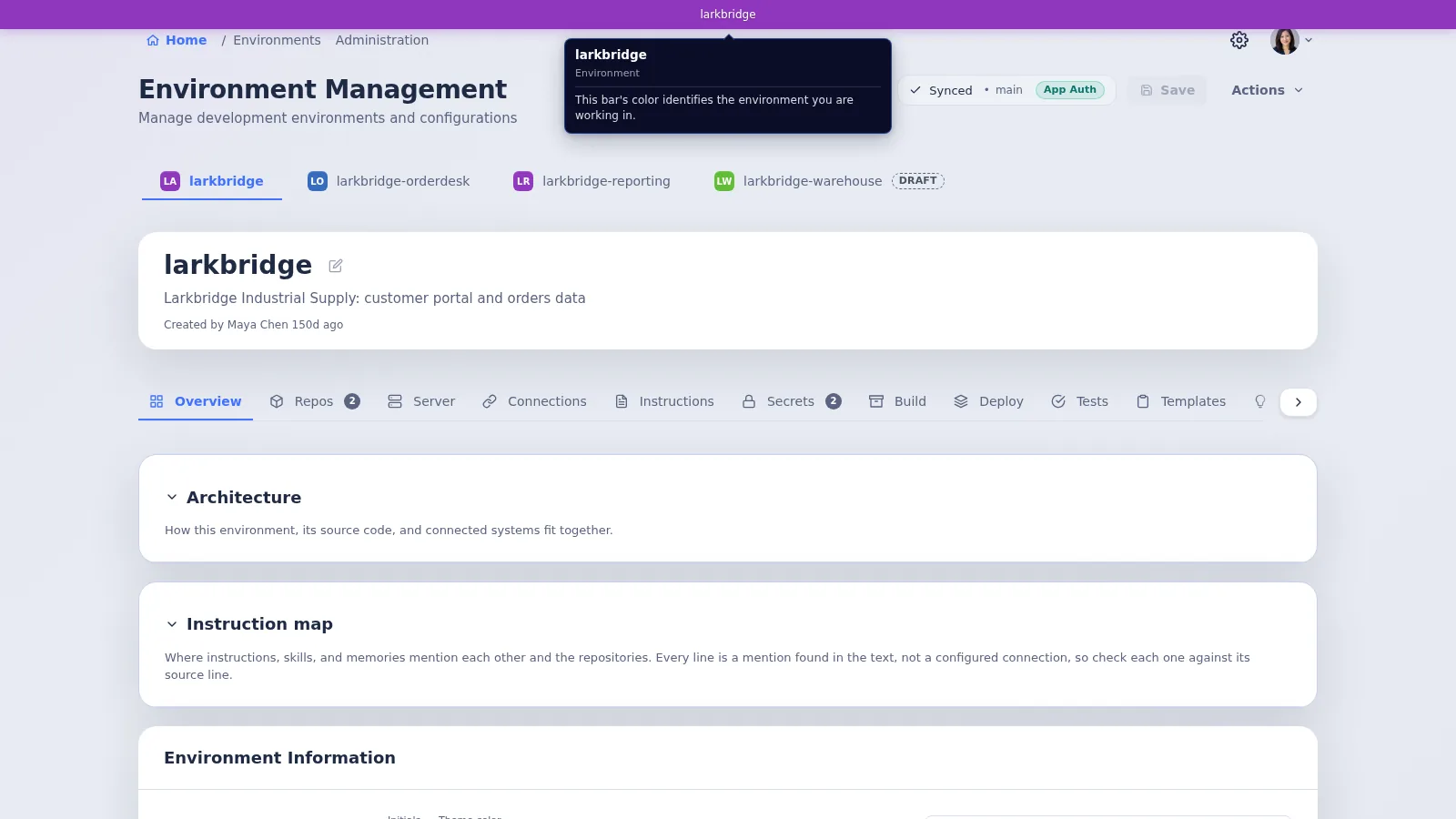
- Configure your environment. Set up secure access, Git and CI/CD integration, and the first skills and templates.
- Expand capability. More program types move to agents, new skills capture institutional knowledge, and Jira integration enables automated ticket processing.
- Keep optimizing. Regular tune-ups refine agents and prompts and adopt new model capabilities.
Treat agentic development as infrastructure that deserves configuration, governance and continuous improvement, not as a plug-in.
Why Timing Matters Now
Deploying AI tools doesn't deliver results on its own. InfoQ's coverage of Google's DORA report quotes DORA: "We don't measure AI by the code it writes but by the bottlenecks it clears" (InfoQ, May 2026).
For custom systems, timing matters most: experienced developers are retiring and technical debt keeps growing. Teams that learn to direct agents now build an advantage that is hard to catch up to; read how one company completed 14 months of work in about 2.
Series Conclusion: From Understanding to Action
Ready to take your coding agents' work to verified, ready-to-commit outcomes on the systems that run your business? Talk to sales or start with a Reimagine engagement.
Questions
How Do You Measure the ROI of CoderFlow?
Compare CoderFlow to the cost of added engineering capacity, such as hiring or outsourcing, and track project timelines, cycle time and backlog velocity alongside its usage dashboard. Customers report 5 to 10x developer productivity, and one completed 14 months of work in about 2.
How Should a Company Start With CoderFlow on a Custom System?
Start CoderFlow on one real workflow that produces a verified result, such as documenting a program or clearing one category of technical debt, then add skills, templates and integrations such as Jira Cloud. A Reimagine engagement, which aims to solve a business problem in days, is one way to start.
How Much Does CoderFlow Cost?
The full CoderFlow platform has custom pricing, whether Profound Logic hosts it on CoderFlow Cloud or you self-host it, and AI model usage runs through the provider accounts your IT team connects. Talk to sales for a quote.