
Oracle Forms and Reports With CoderFlow
Forms, triggers and PL/SQL that run order management, finance and operations on Oracle.
Start with one defined workflow on the systems you already run, then expand as it proves itself.
-- ORDERS.fmb : WHEN-VALIDATE-ITEM on ORDER_LINES.QTY
DECLARE
  v_avail NUMBER;
BEGIN
  SELECT on_hand - allocated INTO v_avail
    FROM inventory WHERE item_id = :order_lines.item_id;
  IF :order_lines.qty > v_avail THEN
    :order_lines.backorder_flag := 'Y';
    message('Not enough stock. Line backordered.');
  END IF;
EXCEPTION
  WHEN NO_DATA_FOUND THEN
    :order_lines.backorder_flag := 'Y';
END;When an item has no row in INVENTORY yet, the validation trigger treats it as out of stock and backorders the line. New items get their inventory row from a nightly job, so same-day orders always backorder.
Illustrative example with synthetic code.
Running on Oracle Forms Today
Business logic is split between form triggers, libraries and the database.
Form files are binary, so changes are hard to review.
The runtime is aging, and the pressure to move is growing.
What CoderFlow Does for Oracle Forms
Documentation and Q&A
Self-maintaining documentation of your Oracle Forms applications, and plain-language answers with sources for business users and developers.
Impact Before Change
See which programs, files and screens a change will touch before anyone starts.
Changes Prepared by Agents
Agents prepare changes in isolated containers. Your team builds and tests them with its existing toolchain, then approves.
Into Git, Reviewed Forever
Convert forms to XML and keep them in Git alongside PL/SQL packages, so every change is reviewed as text.
Triggers, Mapped End to End
CoderFlow documents forms, triggers, libraries and the PL/SQL they call, so you can trace any behavior to its source.
Web Screens, Logic Intact
Agents can rebuild heavily used forms as web screens while the PL/SQL business logic stays in the database.
Answers About Your Oracle Forms System, Without a Ticket
With CoderFlow for Business, people in operations, finance and customer service ask how the system works and get answers drawn from its source code and documentation, with sources. Reports can pull data through web APIs your IT team makes available, and requests reach IT with the context attached.
Explore CoderFlow for Business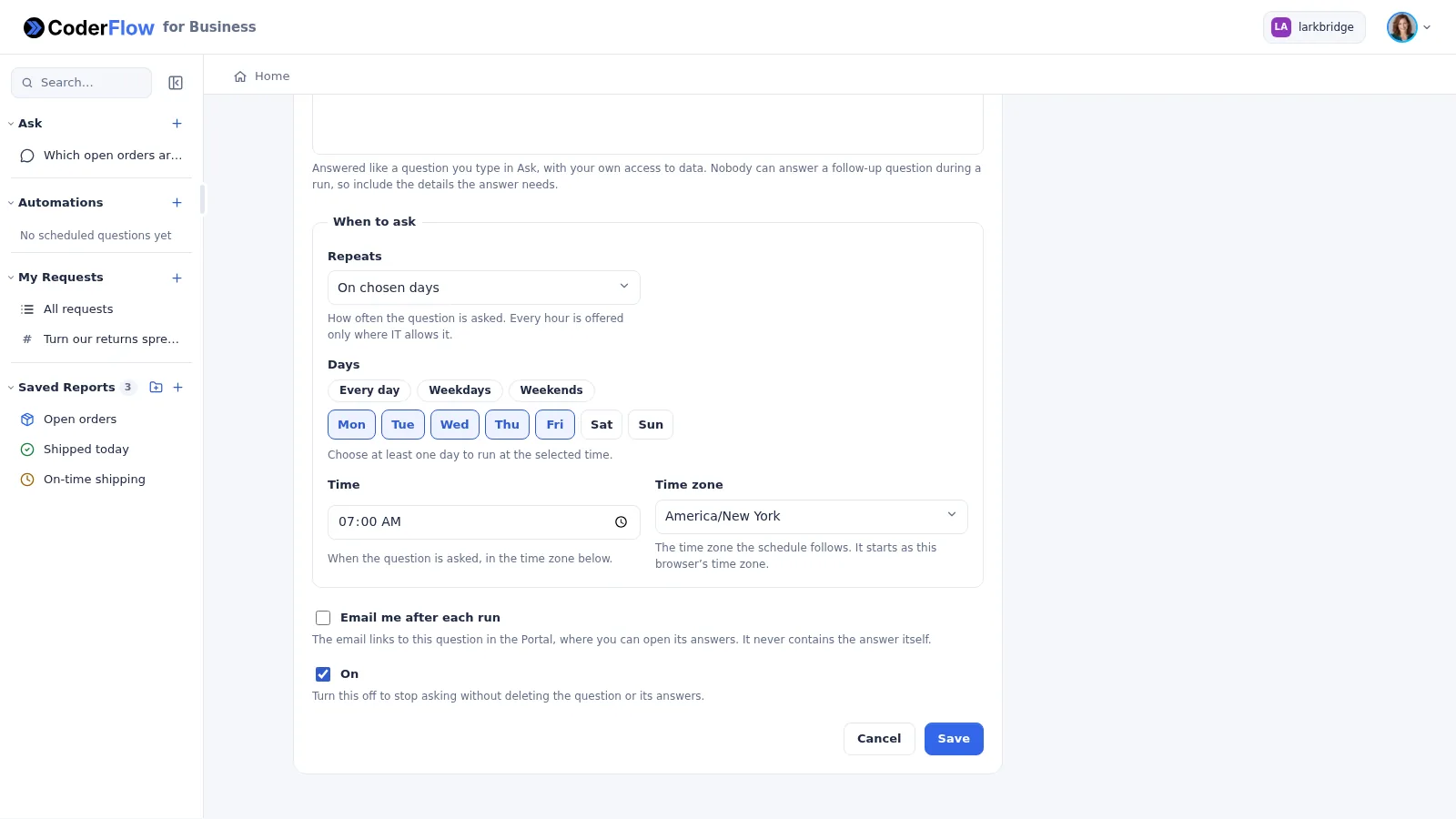
How It Connects
Agents work on converted form source and PL/SQL in Linux containers. Compiling forms uses your Oracle Forms tooling.
Keep It, or Move Forward
Keep the database and its PL/SQL. Move the screens to the web when you're ready, one form at a time.
Same-Day Orders, Fixed
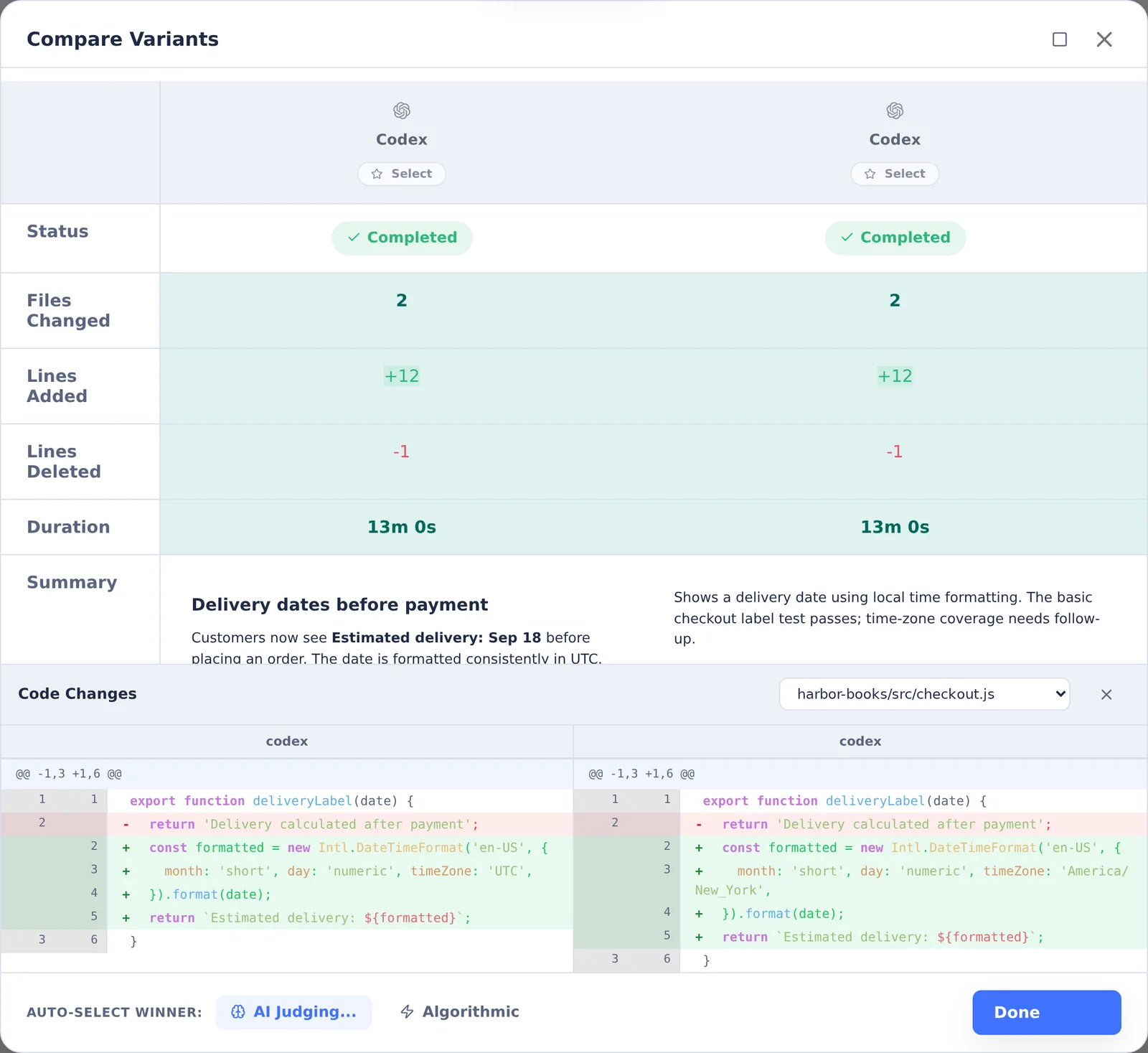
Customer service asks why new items always backorder. Ask finds the validation trigger and the nightly inventory job behind it. IT has an agent change the trigger and add a test, then reviews and approves it.
Walkthroughs for your system are coming. Meanwhile, explore CoderFlow on a web app, or see how it works in the 2-minute quick look.
Oracle Forms Questions
Can CoderFlow Document an Oracle Forms Application?
CoderFlow documents forms converted to XML with Oracle's Forms-to-XML utility (frmf2xml), including triggers, program units, libraries and the PL/SQL packages they call. It traces any behavior back to its source and prepares changes for your team to review.
How Does CoderFlow Connect to Oracle Forms, and Who Compiles the Forms?
Converted form XML and PL/SQL packages go into Git, and agents work on them in Linux containers. Your team converts changed XML back to .fmb, compiles with frmcmp, tests and approves, or agents can run build steps on a build host over an SSH connection.
Can Business Users Report on Our Oracle Data With CoderFlow?
CoderFlow reports on Oracle data through web APIs your IT team exposes, such as Oracle REST Data Services; there's no direct Oracle connection today. Ask in CoderFlow for Business also answers how the application behaves from the forms, PL/SQL and documentation.
How Do We Move off Oracle Forms Without a Big Rewrite?
CoderFlow agents rebuild one form at a time as web screens while the PL/SQL business logic stays in the database, and those screens are built and tested inside CoderFlow. Many teams keep the rest of the Forms application running, with reviewed changes, until it's their turn.
How Do We Get Started With CoderFlow for Oracle Forms?
Convert a handful of forms to XML, add the PL/SQL packages to Git, and ask CoderFlow to explain them. Then talk to sales about the full platform, or a Reimagine engagement to pick the first forms to rebuild as web screens.
Is Oracle Forms a Legacy System, and Can CoderFlow Modernize It Without a Rewrite?
CoderFlow works on what you already have, with no migration and no starting over. It documents forms, triggers and packages from exported source, and agents prepare changes your team compiles and tests with Oracle Forms before approving.
Industries where we often see Oracle Forms
Bring AI to Your Oracle Forms Applications.
Talk to sales about your setup, or start with a Reimagine engagement.