
When AI agents run the build-test-fix loop, your day shifts from executing work to directing it. Developers define what a task must accomplish, review verified results and make the calls that require knowing the business. The loop still happens: agents run it, and you decide what gets approved.
The Build-Test-Fix Loop Is Where the Day Goes
Ask an experienced developer on a custom system where their time goes, and writing code is rarely the answer. It goes into running a build, reading the error, tracking down which program broke something, re-running the test and doing it all again. In COBOL, PowerBuilder or Progress OpenEdge applications, that loop can stretch from an hour into an afternoon.
What the Loop Looks Like When Agents Run It
With CoderFlow, you define the task. CoderFlow starts an isolated container with your codebase and build environment, and the agent runs the full cycle until the result meets the acceptance criteria.
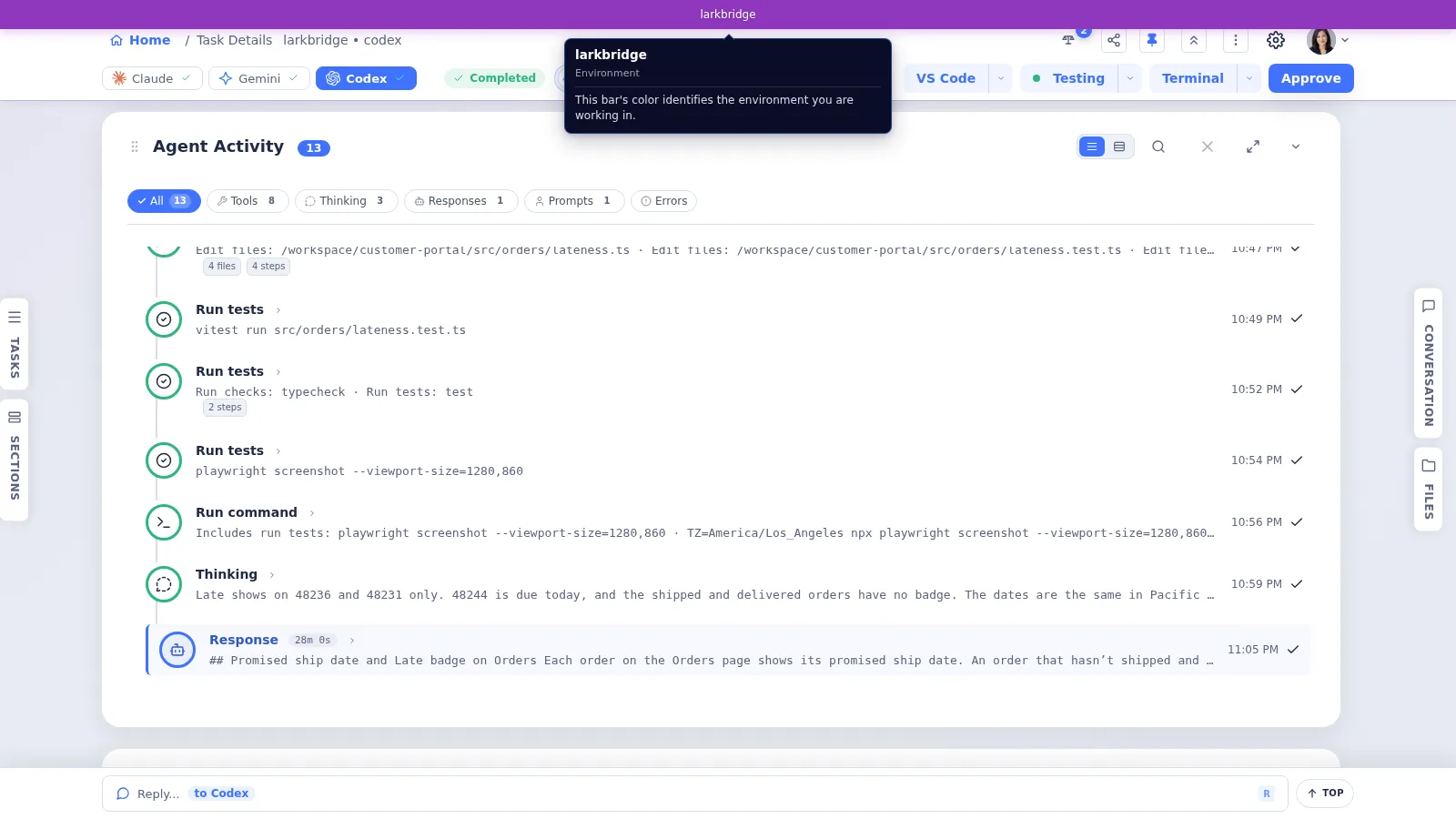
What lands in front of the developer is a finished change, a test result and a commit-ready diff. The developer decides whether to approve it. Claude Code and Codex already run this loop well in their own environments, and agentic coding with CoderFlow runs it against your systems, with the evidence brought to a person who decides.
What Developers Do Instead
Developer work shifts. It doesn't disappear. What remains is the work that needs a person:
- Defining what a task must accomplish, clearly enough for an agent to act on it.
- Reviewing output with real judgment, not just checking that it built.
- Spotting edge cases that weren't in scope.
- Making architectural calls that depend on knowing the business.
What It Means for Development Managers
When several agents work backlog items in parallel, the constraint moves from execution capacity to review capacity. Faros AI analyzed data from 22,000 developers on its own platform, so this is vendor data: as teams moved from low to high AI adoption, median time in review rose 441.5% (Faros AI, April 2026).
That is why each CoderFlow result comes to review with its diff, test output and screenshots attached. Customers report 5 to 10x developer productivity, and same-day turnaround on enhancements that used to wait in a queue.
Why the Real Environment Matters
On custom systems, business logic often lives only in the code, and a change to a nightly batch job can ripple in ways only a veteran recognizes. So the loop has to run against the real system, not a simulated stand-in.
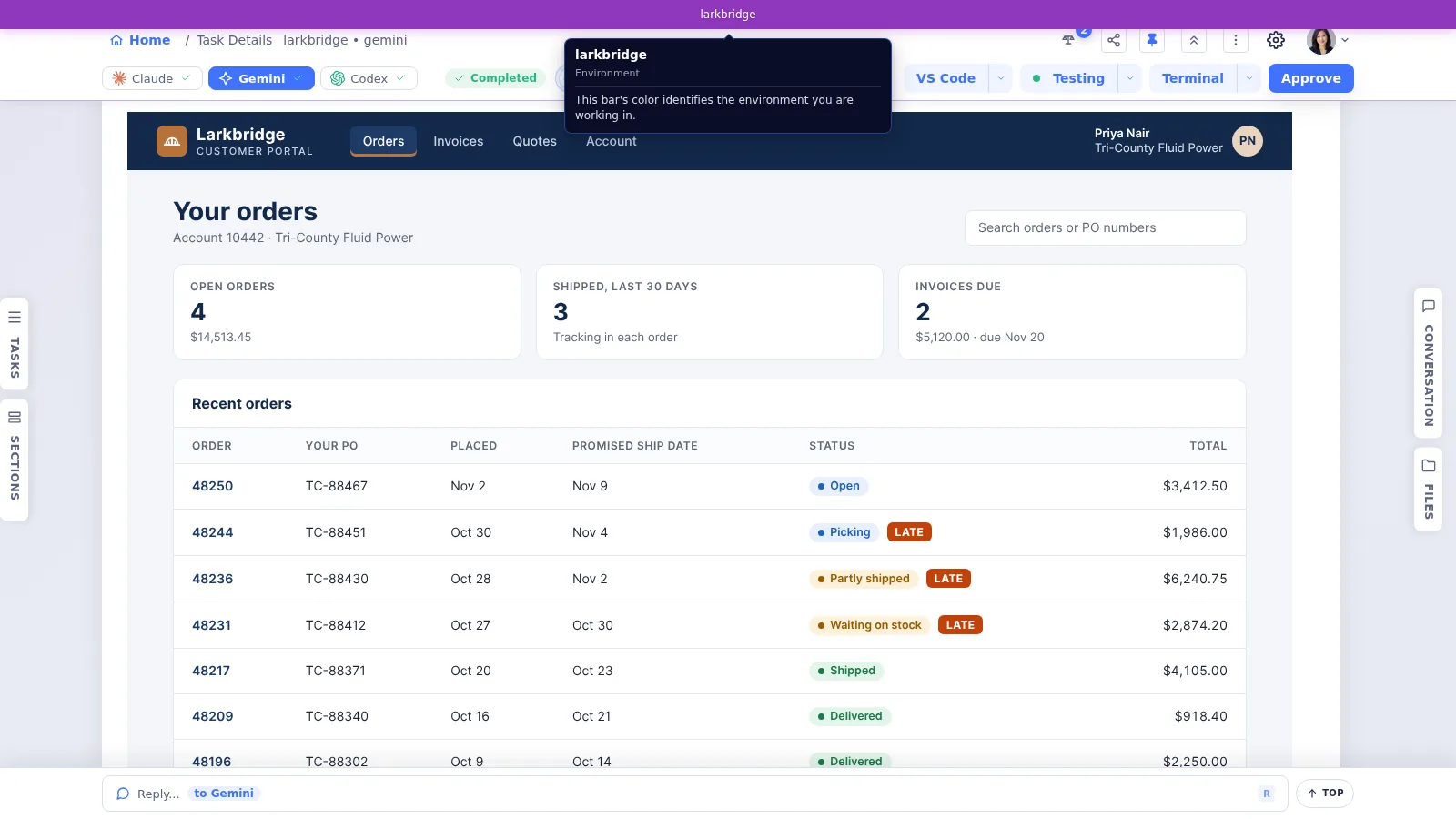
For web applications, CoderFlow agents run the application in their container and test it in a browser with Playwright. On COBOL, VB6 and Delphi, Oracle Forms, MultiValue and other custom systems, agents build and test with your toolchain where it's available, or prepare changes your team builds and tests.
The Day Doesn't Look the Same
The build-test-fix loop still happens. What changes is who runs it, and what that frees your team to do instead. Talk to sales or start with a Reimagine engagement.
Questions
Does Agentic Coding With CoderFlow Replace Developers?
CoderFlow agents run the build-test-fix loop, while developers decide what the work should accomplish, review the diff and test results, and approve every change before it is committed. Their knowledge of the business becomes more valuable, because it now steers many tasks at once.
What Is the Build-Test-Fix Loop, and How Does a CoderFlow Agent Run It?
A CoderFlow agent runs the repeated cycle of building a change, reading the errors, fixing them and retesting until the change works. It does this in its own container with your codebase and build tools, and puts screenshots and test output in the task summary for the developer's review.
How Many CoderFlow Agents Can Work on a Team's Backlog at the Same Time?
CoderFlow runs up to 8 agents at once across a server by default, and admins can set an optional per-developer limit per environment. Each task gets its own isolated container with CPU, memory and process limits, so parallel work doesn't collide.