When several AI agents attempt the same task in CoderFlow, judge agents decide which result is best. They compare the completed implementations on build and test results, code quality, performance and fit with your architecture, explain their reasoning and coordinate refinement until the work meets the acceptance criteria. A developer then reviews one validated, explained result and decides whether to approve it.
Why Single-Path Execution Leaves Quality on the Table
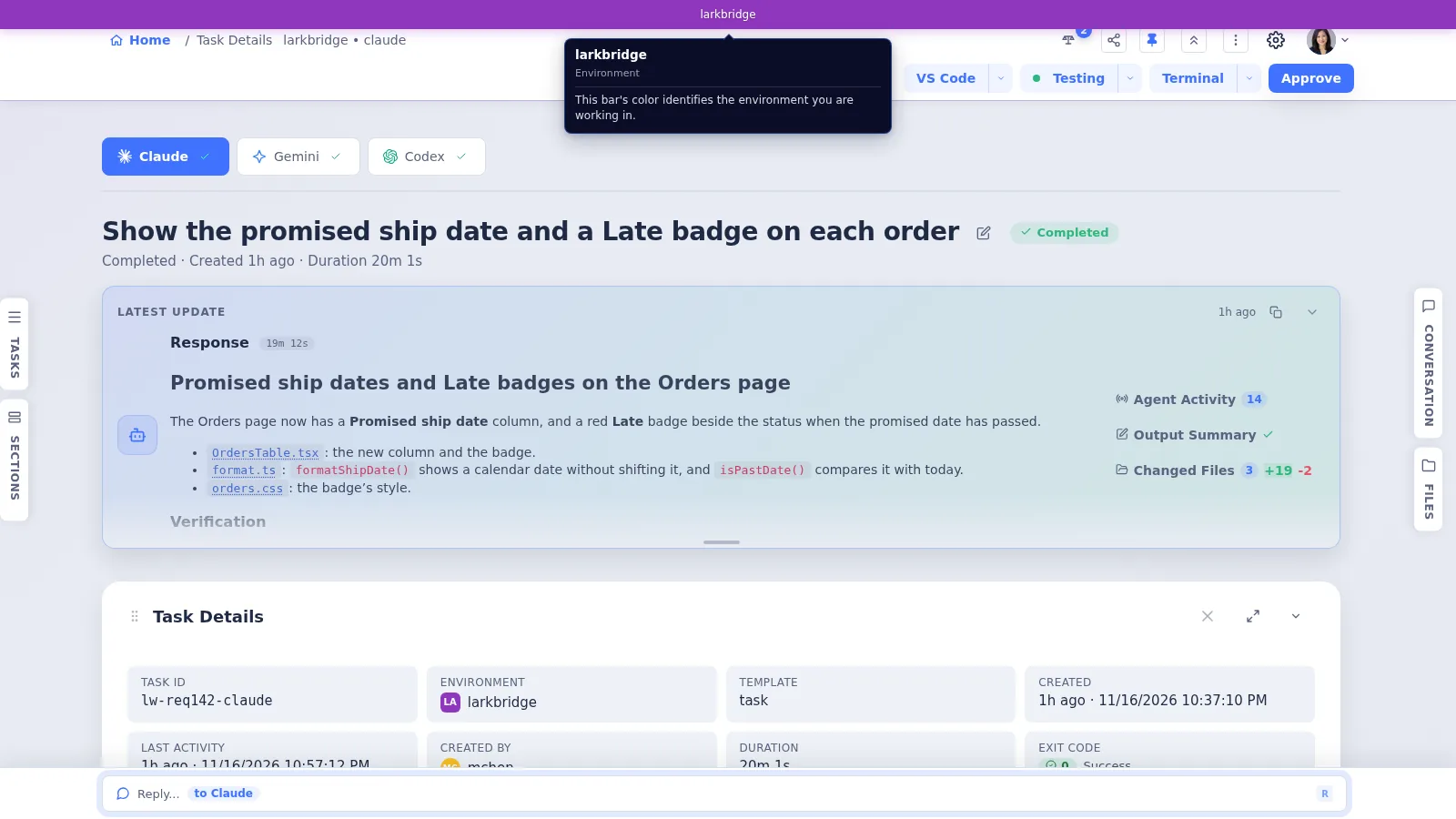
Most development follows a single path: one approach, debugged until it works. CoderFlow can run the same task across multiple models at once, such as Claude, OpenAI models, Google Gemini and Grok, each building its own implementation in an isolated container. The question becomes which one is actually the best answer.
What the Judge Evaluates
A judge agent doesn't pick a winner on gut feel. It compares whether each implementation built and passed its tests, the quality and maintainability of the code, performance, and alignment with your architectural standards.
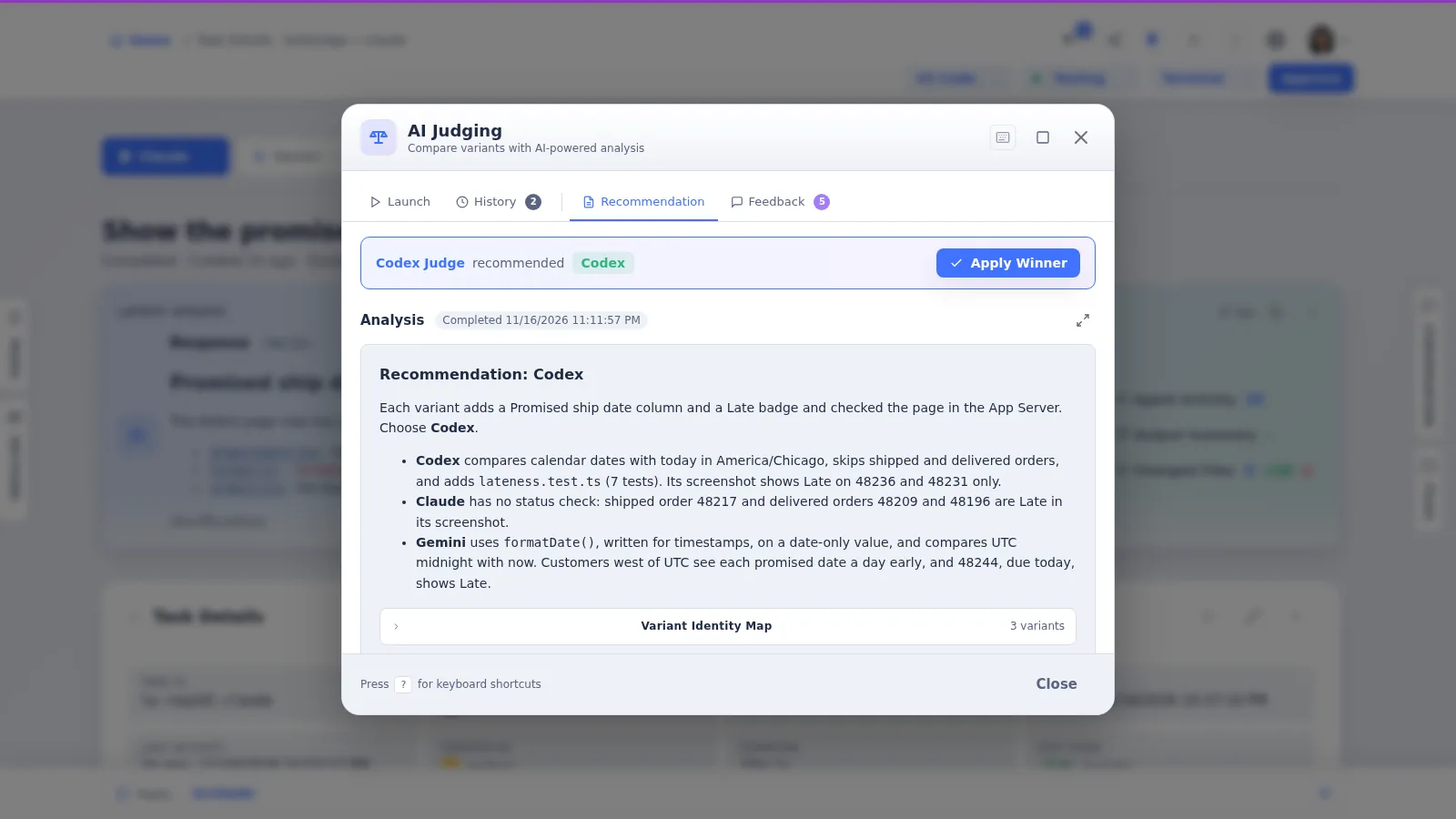
The judge explains why one implementation outperformed the others, with the strengths and weaknesses of each, so a reviewer sees the reasoning behind the call. Learn more about change management for AI.
When the Judge Runs
With auto-judge enabled, judges evaluate results automatically once at least two variants complete successfully. A judge also finds where the strongest implementation could still improve and coordinates more agent work on those gaps, until the work meets the task's acceptance criteria.
The Cost Conversation, Directly
Running a task across multiple agents uses more tokens than one run. The case for that spend is rework reduction: a subtly wrong result caught late costs review time, a follow-up fix and any downstream impact. What a developer reviews is the best validated result available, not a set of options to triage.
Why a Visible Judge Matters
Some AI coding tools route work between models without showing which path was chosen or why. CoderFlow deliberately takes the opposite approach: model selection is under your control, and the judge's reasoning is visible. See how CoderFlow handles this for IT and developers.
What This Looks Like End to End
Agents attempt the task independently against your real environment, judges compare the variants and the strongest result is refined and explained. Your team still makes the final call, whether the system is COBOL, Delphi, Progress OpenEdge, Java or a modern web stack, as part of the CoderFlow platform.
Want to see judge agents on your own codebase? Talk to sales or start with a Reimagine engagement.
Questions
What Is a Judge Agent in CoderFlow?
A CoderFlow judge agent evaluates other agents' completed work: in comparison mode it recommends a winner with its reasoning, and in review mode it returns Pass, Needs improvement or Fail. Variants are anonymized as A, B and C so a judge can't favor its own vendor, and judges are read-only.
Can CoderFlow Keep Refining a Result Until It Passes Review?
CoderFlow's keep reviewing until Pass option repeats review and fixes for up to 3 rounds by default, configurable to a maximum of 10. A developer still reviews the final diff and approves it before anything is committed.
Is Running a Task on Several AI Models in CoderFlow Worth the Extra Cost?
CoderFlow shows per-task token usage, so you can reserve parallel runs and judges for complex or high-risk changes where a subtle mistake is expensive. Routine tasks can use one agent.