
AI for COBOL works best as a disciplined loop: agents read the programs, copybooks and job scripts, make a change, then compile and test it against known data before a person reviews it. Where COBOL compiles on Linux or on a Unix server over SSH, agents run that loop themselves. On the mainframe, they prepare changes that your team builds and promotes.
What Can AI Agents Actually Do With COBOL Today?
COBOL's verbose, regular structure makes it readable for AI models. Agents are useful for four jobs:
- Explain a rule, with the program, paragraph and copybook behind the answer.
- Map which programs use which copybooks, files and job steps.
- Document programs and business rules, and keep that documentation current.
- Change and test with test files, comparing the results.
Where Do COBOL Builds and Tests Run?
This decides how much an agent can verify itself.
- Linux. With GnuCOBOL or a licensed compiler in the container, agents compile and test in their own workspace.
- AIX or other Unix. Agents reach the build host over an SSH connection that IT defines.
- Windows. Agents prepare the change, and your team builds it on its Windows machine.
- Mainframe. Agents work on source exported to Git, and compiling and testing on z/OS stay with your mainframe team.
How to Change COBOL Safely With AI Agents
- Put the source in Git, with copybooks, JCL or job scripts and file layouts.
- Document the area first, including every program that shares its copybooks and files.
- Capture today's behavior as input files and expected outputs, using masked or synthetic data.
- Write the change as acceptance criteria, such as "apply payments to the oldest due invoice first, and leave every other total unchanged."
- Let the agent change, compile and test, then review the diff and test output together before you approve and promote it through your normal process.
How CoderFlow Helps
Every CoderFlow task runs in its own isolated container built from an environment your IT team defines, with your compiler installed there or reached over SSH. You can run up to five variants of the same change across agents from different AI providers, and AI judges compare the anonymized results and recommend one.
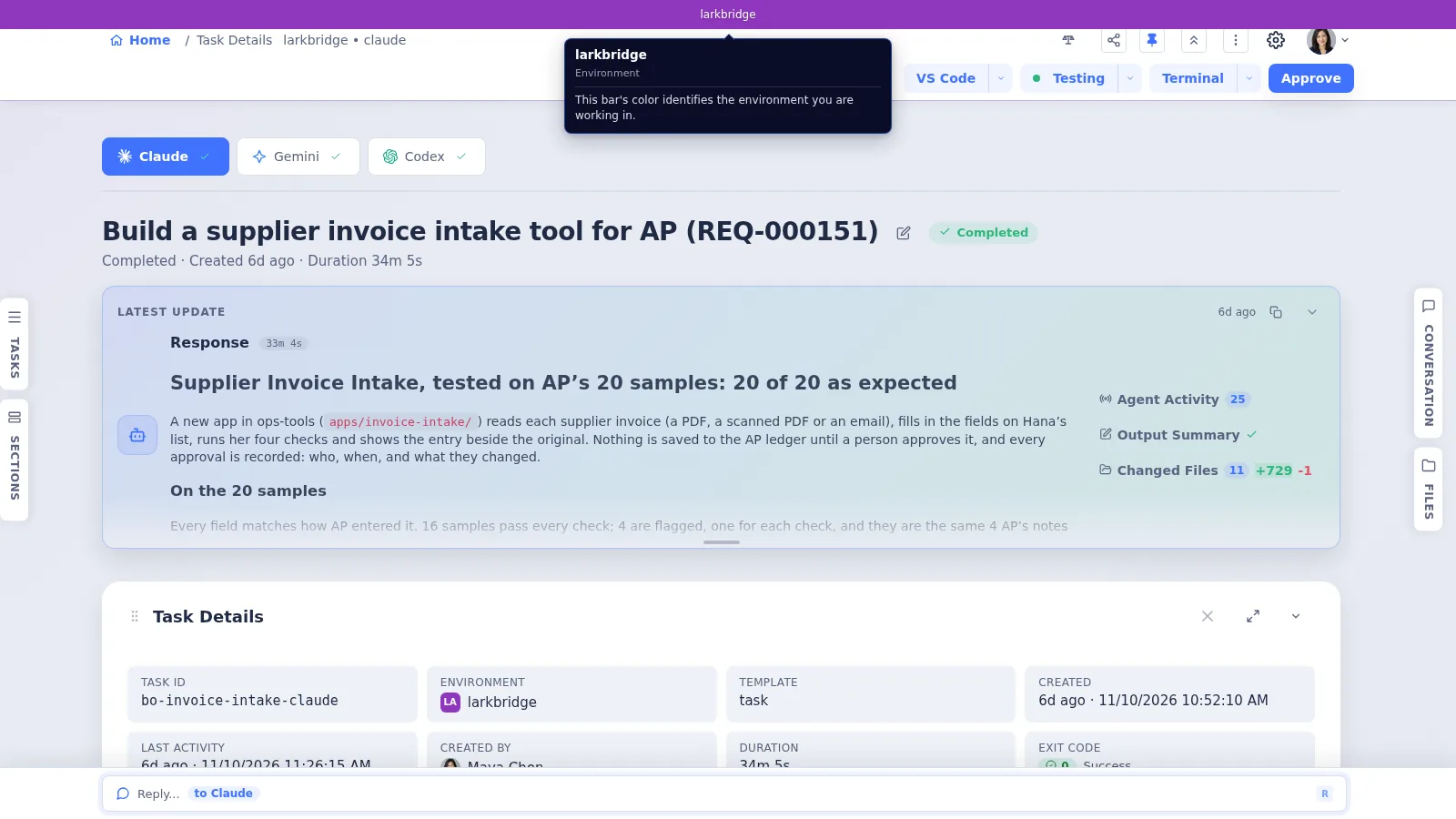
CoderFlow also maintains documentation and plain-language answers for COBOL on Unix, Linux and Windows and the IBM mainframe. Nothing is committed until a person approves.
What Should You Watch out For?
- Data layouts. REDEFINES, packed decimal fields and implied decimal points are easy to misread, so check totals to the cent.
- Job flow. Many rules live in the order of batch steps.
- Conversion promises. CoderFlow does not convert COBOL to another language automatically, but agents can rebuild a module in stages from its documentation. See whether to futurize, rewrite or replace.
Start With One Program
Put one COBOL application in Git, document the programs behind one business rule, and try one small change with test files. Talk to sales about your compilers and platforms, or start with a Reimagine engagement.
Questions
Can AI Agents Compile and Test COBOL in CoderFlow?
CoderFlow agents compile and test COBOL wherever the compiler is reachable: in the environment's Linux container or on a Unix build host over SSH. On Windows-only setups and the mainframe, agents prepare changes that your team builds, tests and promotes.
Does CoderFlow Convert COBOL to Java or Another Language?
CoderFlow documents COBOL and helps you change it safely where it runs, without automatic code conversion. If you decide to move a module, agents can rebuild it in stages from that documentation, and your team approves every step.
Is COBOL Too Old a Language for AI to Help With?
CoderFlow agents read COBOL well because it is plain, structured text. They explain its rules with sources, map copybook and file dependencies, and make changes that a person approves, compiled and tested wherever the compiler is reachable.