
The real barrier to agentic coding on custom systems is not the AI model. It's the software delivery toolchain: Git, CI/CD pipelines and automated testing, plus the governance to run agents safely against the systems your business depends on. Put those in place, even partly, and agents can complete real engineering work; skip them, and good code still waits on the same manual process.
For many teams running COBOL, PowerBuilder, Oracle Forms or Progress OpenEdge applications, that toolchain isn't there yet. That's normal, and it's fixable.
What Agentic Coding Actually Requires
Coding agents such as Claude Code, Codex and Cursor's cloud agents already write code, build it, run tests, interpret failures and iterate. To do that on your systems, they need your toolchain: builds that run without someone pressing the button, tests they can read, and access to databases and services to validate business logic, all with governance.
Three Prerequisites You Can't Skip
Git for Source Control
Agents work through Git: branches, commits, pull requests and version history. Many custom systems keep source in mainframe datasets, PowerBuilder libraries, Oracle Forms modules or a shared drive of dated copies. Moving to Git takes effort, but everything else builds on it; here's how to get your code into Git.
CI/CD Pipelines
The pipeline builds each change, runs the tests and reports back, so the agent can keep, refine or rethink the change. Without CI/CD, every build-test-debug cycle needs a person, and the work waits.
Automated Testing
This is the prerequisite that surprises most teams. To work independently, agents must validate their own changes with automated testing: unit, integration, business logic and end-to-end tests. The better your coverage, the more confidently agents can operate.
Why Custom Systems Often Lag Here
These systems were built for stability, with experienced developers making careful, deliberate changes. With agents, Git, pipelines and tests become essential infrastructure, because agents don't carry a senior developer's institutional knowledge.
Governance Is Part of the Toolchain
Every agent action should be logged: what changed, when, by which agent and on what instructions. Agents should work inside your environment, in isolated containers, with role-based access and approval workflows so people review even agent-validated changes. See how CoderFlow approaches security and governance.
A Staged Path That Works
- Get into Git. Start with one application or module.
- Add automated testing. Build verification alone catches a surprising number of errors; add more tests as coverage grows.
- Implement CI/CD. Build and test automatically on every commit or pull request.
- Pilot agentic coding. Start with a bounded, low-risk use case such as documentation or unit test generation.
Each stage improves development today. You aren't investing in a future AI project; you're futurizing how your software gets delivered.
How CoderFlow Closes the Gap
Many agentic platforms assume Git, CI/CD and comprehensive testing are already in place. CoderFlow assumes you may not have those yet, and it's designed to help you build them.
Agents work in isolated containers with secure access to your code, databases and services, and what they read goes only to the AI provider IT configured. Where the toolchain runs in CoderFlow's Linux environments, agents build and test changes themselves; elsewhere, they use your toolchain where it's available or prepare changes your team builds and tests.
Profound Logic also helps with Git migration, CI/CD pipelines and automated testing frameworks. Agent templates cover work such as documenting applications, refactoring data access to SQL and moving code to current standards.
Where to Start
No Git? That's your first priority, with pipelines and tests next.
The 5 to 10x productivity gains customers report come from agents completing work end to end, with people reviewing and approving the results. Talk to sales or start with a Reimagine engagement.
Questions
What Does a Custom System Team Need Before Adopting Agentic Coding With CoderFlow?
CoderFlow works best with source in Git, a repeatable way to build and some automated tests, because its agents work through Git and validate their own work. You can start with one application in Git and a documentation pilot, then add tests and pipelines.
Can CoderFlow Work With Existing Source That Isn't in Git Yet?
CoderFlow can host Git repositories itself, and Profound Logic helps move source into Git from wherever it lives today. You can start with one application and add more later.
Which Git Providers Does CoderFlow Work With?
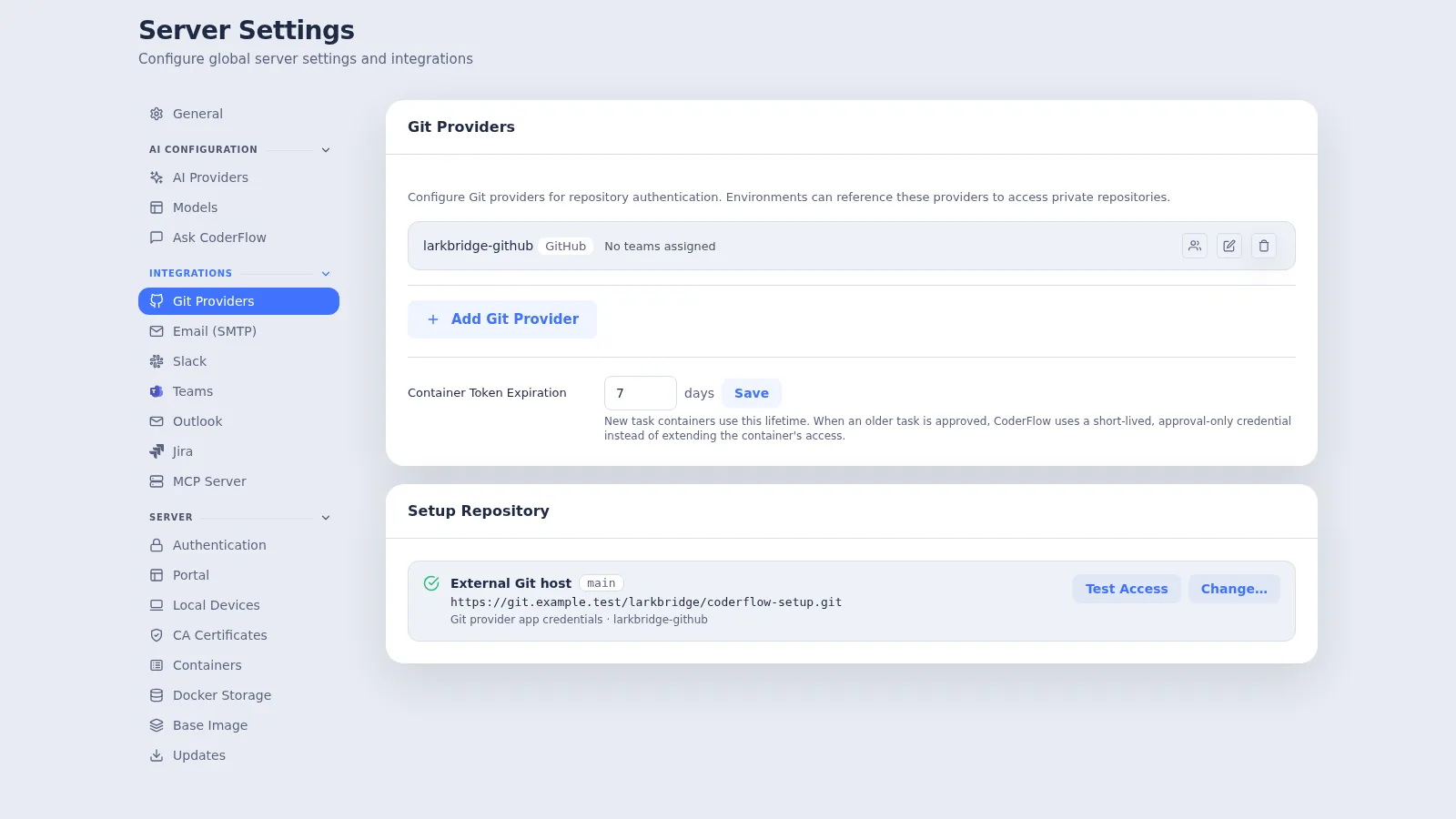
CoderFlow works with GitHub (github.com, Enterprise Cloud and Enterprise Server), Azure DevOps Services and Server, CoderFlow-hosted Git, and other HTTPS Git hosts such as GitLab or Bitbucket through a personal access token. Pull requests can be opened on GitHub and Azure DevOps.