
You can maintain a homegrown .NET, Java or PHP application with AI agents and keep control by giving the agents your real code, build and tests, and by making a person approve every change. In CoderFlow, agents explain the code, prepare changes, build and test them in an isolated workspace, and hand back a diff with test results. Nothing reaches your repository until someone on your team approves it.
Why Are Homegrown .NET, Java and PHP Apps Hard to Maintain?
Years on, a homegrown application holds rules and integrations that nobody fully wrote down. PHP alone is used by 69.3% of the websites whose server-side language can be identified, according to W3Techs (October 2026). The problem is rarely the language; it is a backlog of changes that each need someone who understands the whole system.
What Can AI Agents Actually Do on an Existing Application?
An AI agent working on real code reads the repository, runs commands and checks its own work.
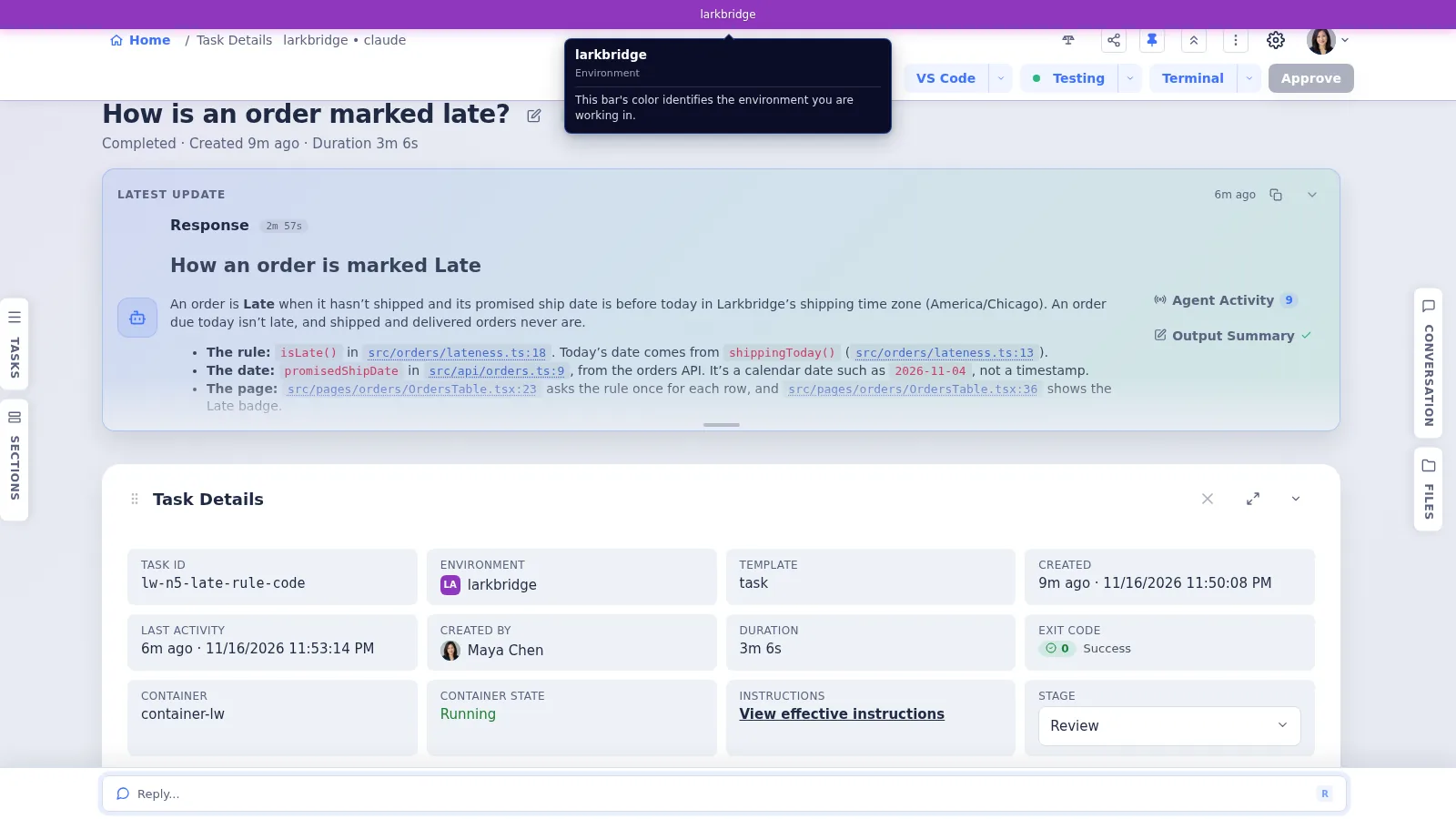
- Explain the code and name the files each answer came from.
- Show the impact of a change on classes, pages, queries and configuration before anyone starts.
- Make the change and build it. With the .NET SDK, a JDK with Maven or Gradle, or PHP with Composer in the environment, agents compile, run the unit tests and fix failures before you review.
- Test it in a browser with the Playwright and Chromium in every workspace, and attach screenshots.
- Keep up with updates to frameworks and libraries.
See custom .NET applications, Java applications and PHP applications.
How Do You Keep Control When Agents Change Your Code?
Control comes from the process around the agent, not from trusting the agent. Each task runs in its own isolated container with short-lived Git access scoped to its repositories, and protected branches block direct pushes.
A reviewer checks the diff, test output and screenshots, then approves the change as a commit, branch or pull request, and CoderFlow records who approved it and when. Roles decide who can launch and approve tasks. Read more about change management for AI agents.
How to Start Maintaining Your App With AI Agents
- Put the code in Git, starting from what runs in production.
- Set up an environment with your repositories, toolchain and a test database with test credentials.
- Write down what a new developer needs to know. CoderFlow stores it as skills and memory that agents read before every task.
- Hand over small, clear changes, and ask agents to add tests as they go. See AI testing.
- Widen the scope with templates and scheduled checks such as dependency updates.
What About .NET Framework and Other Windows-Only Builds?
CoderFlow workspaces run on Linux, where modern .NET, Java and PHP build without trouble. For .NET Framework, Web Forms and other Windows-only toolchains, agents read, explain and prepare the change, and your Windows build server builds it.
What to Watch out For
- Thin test coverage. Where there are few tests, review more carefully.
- Production credentials. Secrets you assign to tasks are available in the workspace, so use test accounts.
- Your release process still applies. Deploy with the release steps you already trust.
How CoderFlow Helps
CoderFlow puts your code, toolchain, AI agents, tests and approvals in one place. Customers report 5 to 10x developer productivity, which can turn a mid-size company's backlog into a steady flow of reviewed changes.
Run a homegrown .NET, Java or PHP application? Talk to sales about your setup, or start with a Reimagine engagement on one real problem.
Questions
Can AI Agents Maintain a Custom .NET Application Safely?
CoderFlow agents change, build and test a custom .NET application in an isolated workspace, and every change waits for a person to approve it as a commit, branch or pull request. .NET Framework and Web Forms builds need Windows, so agents prepare those changes for your build server.
What Does CoderFlow Need to Work on a Java or PHP Application?
CoderFlow needs the code in a Git repository and an environment with your toolchain, such as a JDK with Maven or Gradle, or PHP with Composer, plus a test database or test site. Agents then explain the code, make changes, run your builds and tests, and hand each change to a person for approval.
Do AI Agents Replace the Developers Who Maintain Homegrown Applications?
CoderFlow agents take on repetitive maintenance such as explaining code, small changes, tests and library updates, while developers decide what to build and review every change. Customers report 5 to 10x developer productivity, which lets small teams keep these applications moving without adding headcount.