AI struggles inside organizations that run custom systems not because the technology is weak: coding agents already write good code. But the approvals, manual testing and coordination that slow work down stay exactly the same. Agentic coding changes that by completing tasks end to end and delivering verified, reviewable results into the governance you already have.
Where Development Work Gets Stuck
In long-lived applications, business rules sit in COBOL modules, Delphi units, PowerBuilder windows or custom .NET and Java services rather than documents. Progress depends on knowing which veteran to ask, and retirements concentrate that knowledge in fewer people.
When one error in a nightly batch program can stop orders from shipping, organizations add approvals, change documentation, testing and access restrictions. Those layers make sense, and they also mean faster code writing, on its own, delivers little.
Why Faster Code Alone Cannot Break Through
Leading coding agents such as Claude Code, Codex and Cursor plan a change, run the build and tests and fix their own failures, but they work best with a single repository, cloud CI/CD pipelines and a comprehensive test suite. In long-lived custom environments, they leave three gaps:
- The work stops at the pull request, and every change still queues for the same approvals and manual checks.
- The agent's environment isn't your system, so teams extract code and context by hand.
- The risk controls stay at full cost, because the change hasn't been verified against the real system.
Research agrees. In a Harvard University job market paper, not yet peer reviewed, using Jellyfish data from 655 firms, firms adopting AI agents opened 35.7% more pull requests, but resolved Jira issues rose only 13.7% and time to approval rose 56.1% (Chen and Stratton, Harvard University, November 2026).
How Agentic Coding Removes the Bottleneck
CoderFlow takes on everything after the code: it runs the agents against your systems, and they present verified outcomes, with evidence, for approval. See agentic coding.
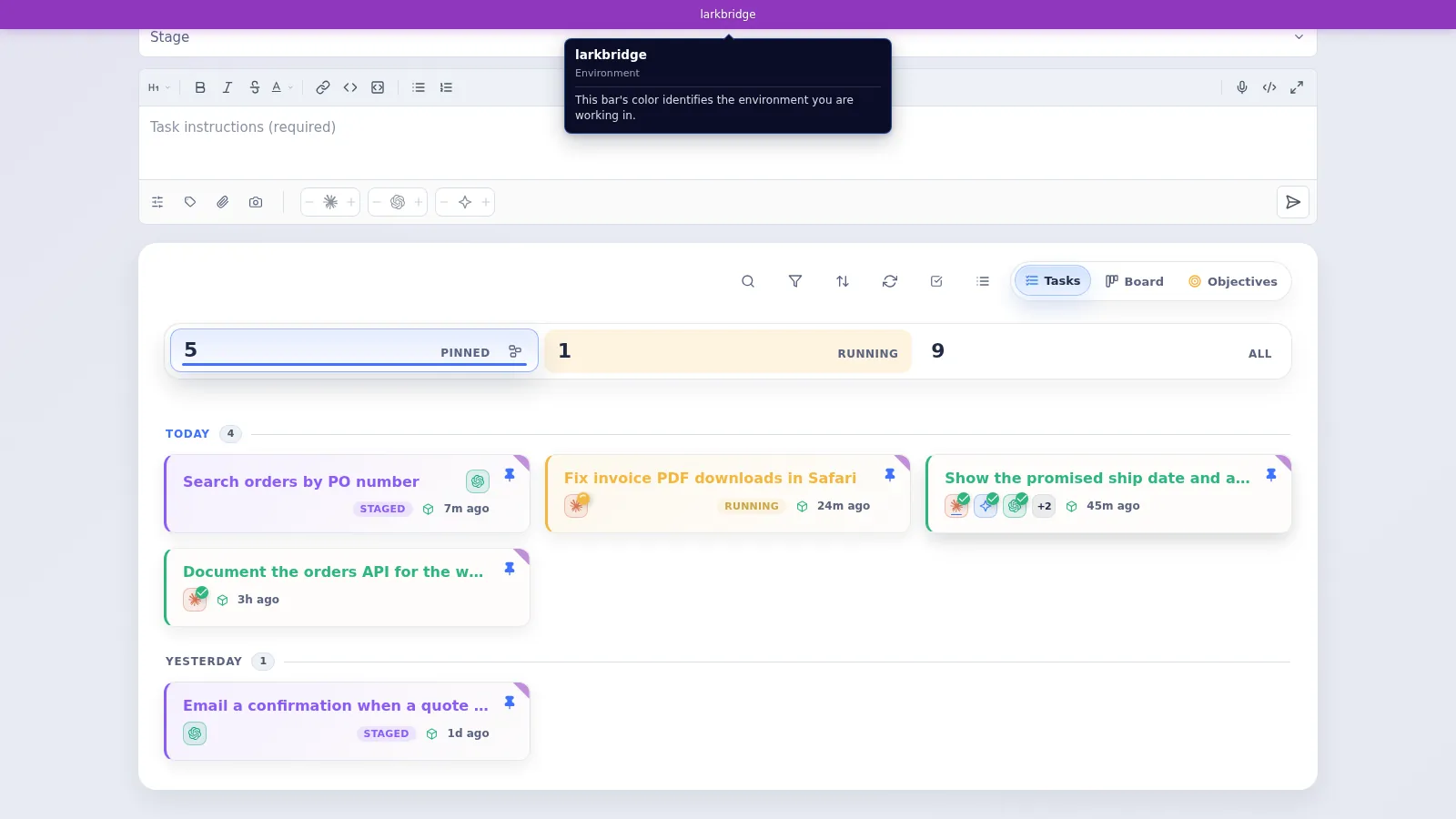
- Runs inside your infrastructure. On premises or in your private cloud, builds, tests and Git operations stay in your network, and only the code context a task needs goes to the AI models you choose.
- Works across repositories and systems. Agents build and test with your toolchain where it is available, or prepare changes your team builds and tests.
- Explores options in parallel. Several agents tackle the same problem, and automated judging recommends the strongest result.
- Governance built in. Every action has an audit trail, role-based access and a human approval gate. See change management built for agents.
Where the Productivity Gains Come From
- Parallel execution. Several tasks run at once, each completing its own build, test and fix cycle.
- Less coordination. With access to code, documentation and systems, agents check dependencies and context themselves.
- A new role for developers. Developers set objectives and review verified outcomes instead of writing and debugging every line.
CoderFlow favors concrete evidence over generated text: successful builds, passing tests and expected runtime behavior.
Start With Clear Wins and Expand
Start where autonomous completion clearly pays off: documenting undocumented programs, building automated tests for business logic, and refactoring technical debt that rarely gets prioritized. Each verified result makes approvals faster and change more comfortable, while controls stay in place and humans still approve every change.
Questions
Why Don't AI Coding Agents Improve Productivity Much in Organizations Running Custom Systems?
CoderFlow addresses what coding agents leave untouched: testing against the real system, approvals and coordination, which are most of the effort in long-lived environments. It builds and tests against your systems where the toolchain allows and delivers a verified result into your existing review and approval process.
Does Agentic Coding With CoderFlow Mean Giving Up Our Change Controls?
CoderFlow adds controls rather than removing them: isolated containers, role-based access, protected branches and a person's approval before anything is committed. Each approval records who approved, when and which commits were pushed, and pull requests keep your existing review steps.
What Is a Good First Agentic Coding Project for a Team Running Custom Systems?
CoderFlow pays off fastest on low-risk work such as documenting undocumented programs, creating tests for critical business logic or refactoring a contained area of technical debt. Each verified result builds trust for the next, and a person approves every change.