
Orchestrated execution means coordinated AI agents carry out the whole engineering loop on your systems, and your team approves what they deliver. With CoderFlow, your team defines the objective and acceptance criteria; agents plan, change, build and test, judge agents compare competing solutions, and a verified result comes back for a developer to approve.
This is Part 1 of our three-part series, Orchestrated Execution for Enterprise Development with CoderFlow. Part 2 covers security and futurizing custom systems, and Part 3 covers implementation and business value.
Why Faster Code Alone Hits a Ceiling
Claude Code, Codex, GitHub Copilot's coding agent and Cursor already edit code, run the build and the tests, and fix what fails. The slow part is everything after: testing against the real system, review, approval and release.
Fiona Chen and James Stratton studied this in a job market paper from Harvard University, not yet peer reviewed, using Jellyfish data from 655 firms. After firms adopted AI agents, pull requests opened rose 35.7%, resolved Jira issues rose only 13.7%, and the time from review submission to approval rose 56.1% (Chen and Stratton, Harvard University, November 2026). The paper's own summary: "Code review becomes the bottleneck."
From Coding Agent to Orchestration Platform
CoderFlow runs the coding agents you choose, including Claude, Codex, Gemini, IBM Bob, Grok and Kimi, and coordinates their work from objective to approved change. Think of it as a managed team of engineers, testers and reviewers that your senior developers direct.
Agents run in isolated containers inside your infrastructure, across multi-repository architectures and long-lived applications such as a COBOL batch suite, a VB6 or Delphi desktop app or a Progress OpenEdge order system. See the CoderFlow platform page.
Complete Engineering Cycles on Your Real Systems
For each task, CoderFlow coordinates the whole cycle:
- Plan from a structured objective with clear success criteria.
- Build and test with your toolchain where it's available; otherwise agents prepare changes your team builds and tests.
- Fix and retry until the errors are resolved.
- Validate against the acceptance criteria before anyone reviews it.
The developer's job shifts from driving every step to setting direction and approving outcomes. See agentic coding with CoderFlow.
Parallel Orchestration and Judge Agents
CoderFlow can run the same task across several AI models at once, each in its own isolated container. Judge agents compare whether each implementation built and passed its tests, its code quality, performance and fit with your standards, and explain why one is stronger.
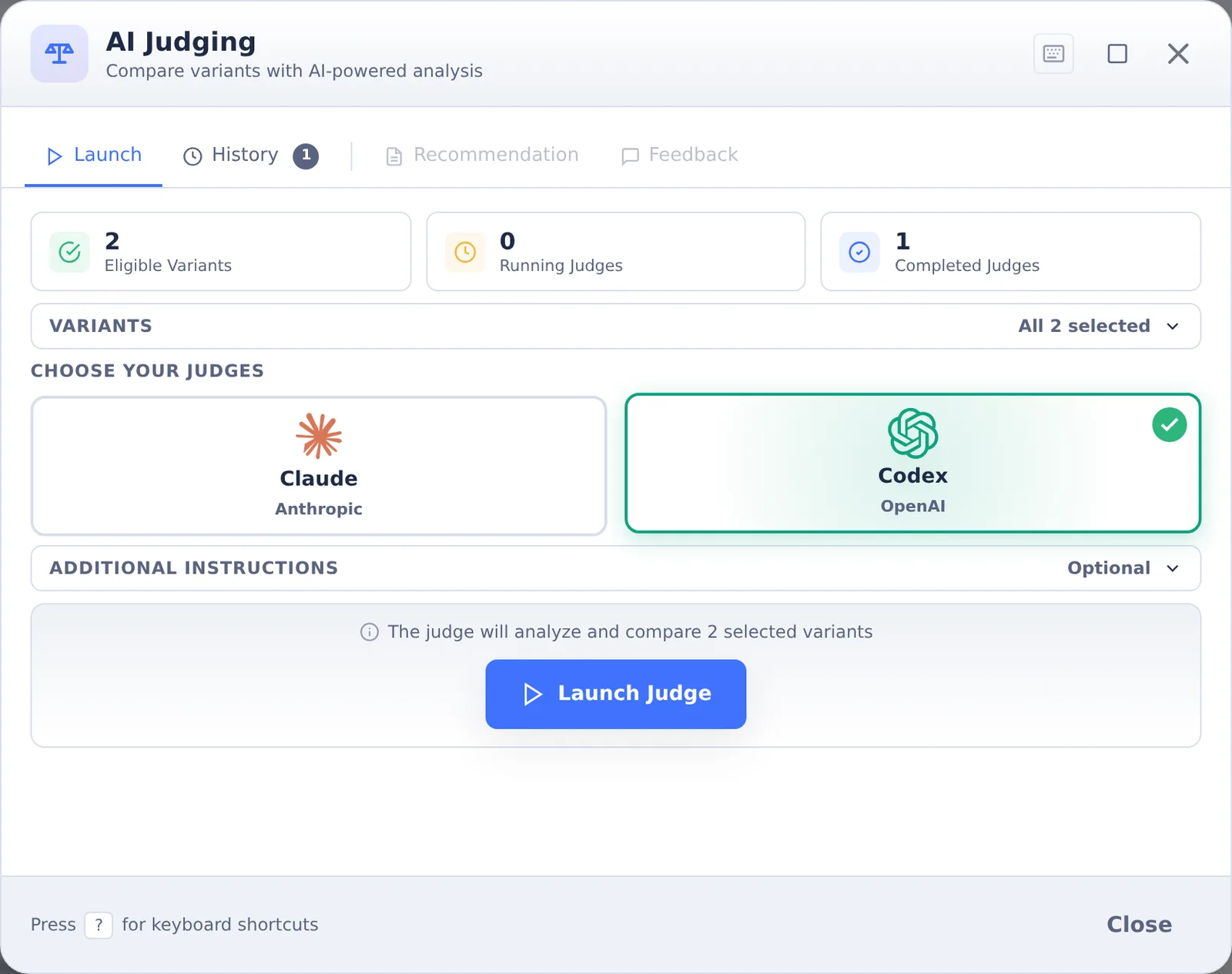
That means no lock-in to a single AI vendor, the best of several attempts instead of a single path, and more insight into different approaches. Judges also identify specific improvements and coordinate further work until the acceptance criteria are met.
What's Next in This Series
In Part 2: Security and Futurizing Custom Systems, we look at how execution stays inside your infrastructure while using cloud AI models, and how the Skills system safely extends what agents can do. Want to see orchestrated execution on a system like yours? Talk to sales or start with a Reimagine engagement.
Questions
What Is Orchestrated Execution in AI Software Development?
In CoderFlow, orchestrated execution means coordinated AI agents carry out the full engineering loop (plan, change, build, test, fix and validate) in parallel isolated containers. AI judges compare or review the results, and a developer approves the verified outcome before anything is committed.
How Is CoderFlow Different From a Coding Agent Like Claude Code or Codex?
CoderFlow runs those agents, and others such as Gemini and IBM Bob, in parallel isolated containers set up like your systems, has AI judges compare the results and hands back tested diffs for a person to approve. Developers work from the web app, the coder CLI, a VS Code extension, Slack or Microsoft Teams.
What Are Objectives in CoderFlow?
CoderFlow Objectives are requirement trees that launch agent tasks, so a multi-part change is planned, tracked and delivered as connected work rather than one oversized prompt. Objectives can come from Jira Cloud issues or QA Mode captures, and every resulting change still goes through human approval.