Verified, ready-to-commit means AI output that has been built, tested against defined acceptance criteria and checked in the real environment, then packaged so a developer can approve it without redoing the work. Leading coding agents already build and test in their own environments. On custom systems, checking the change against the real system and getting it through review is often most of the job.
The Gap Between Generated and Done
Claude Code, Codex and Cursor's cloud agents edit code, run the build and tests in their own environment, fix what fails and open a pull request. Writing code is no longer the hard part. But the agent's environment is not your system, and every change still has to be reviewed, approved and released by people.
When agents open more changes than a team can check, the work piles up after the code. In its own platform data from 22,000 developers, vendor Faros AI found median time in review rose 441.5% as teams moved from low to high AI adoption (Faros AI, April 2026).
On COBOL, PowerBuilder, Oracle Forms or MultiValue, with decades of interdependent business logic, every build catches something. The distance between generated and verified is often the majority of the work.
What Verified Actually Means
Verified code has been built, tested against defined acceptance criteria and confirmed to behave correctly in its intended environment. Not "looks right," but validated against signals that reflect how the system actually runs.
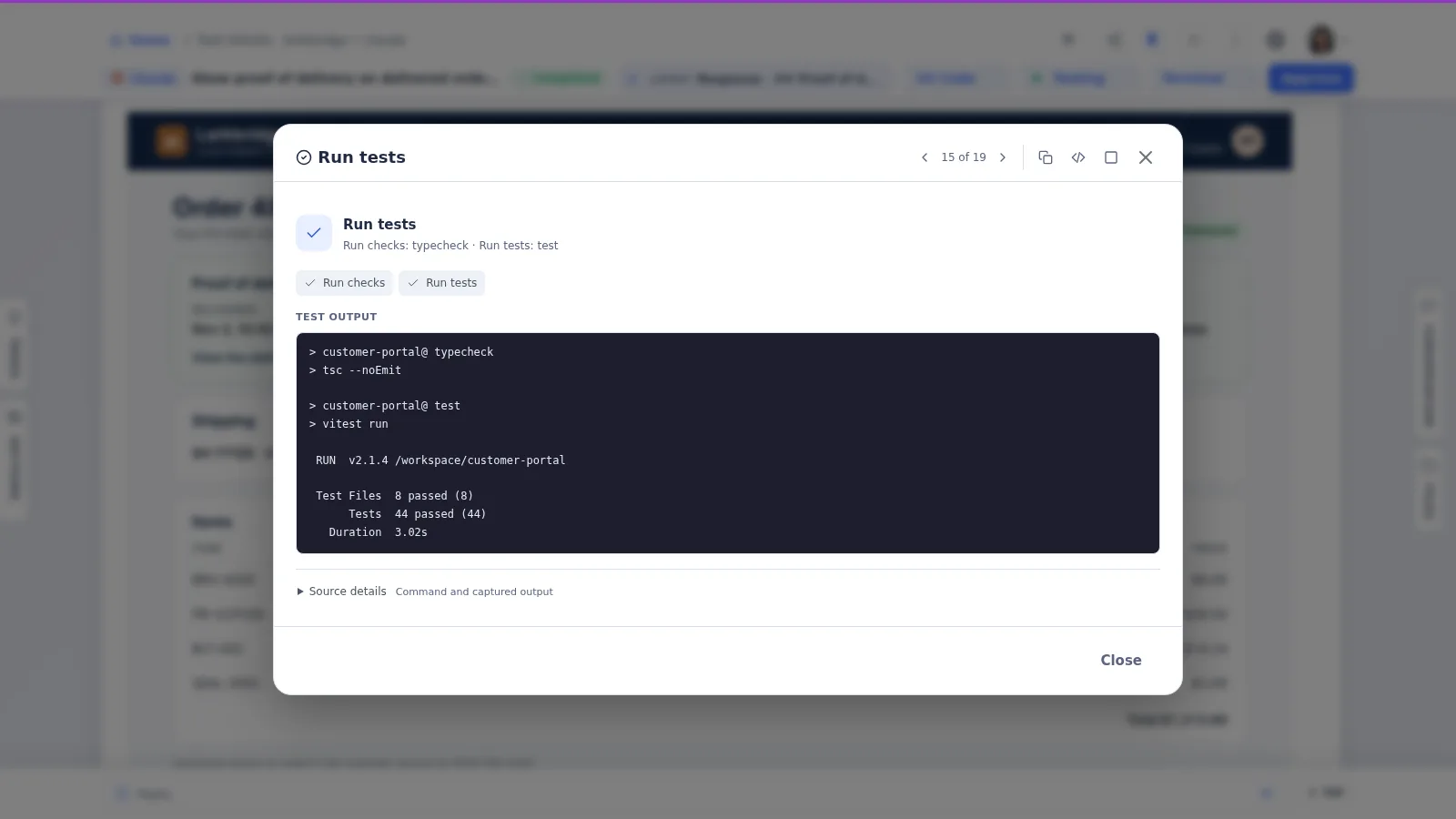
- The build succeeds in the real build environment.
- Tests pass, whatever your team defines as the standard for this kind of change.
- Failures were addressed, fixed and retried as many times as needed.
That takes an execution layer that iterates inside the environment where the code will live; see how CoderFlow agents test.
What Ready to Commit Actually Means
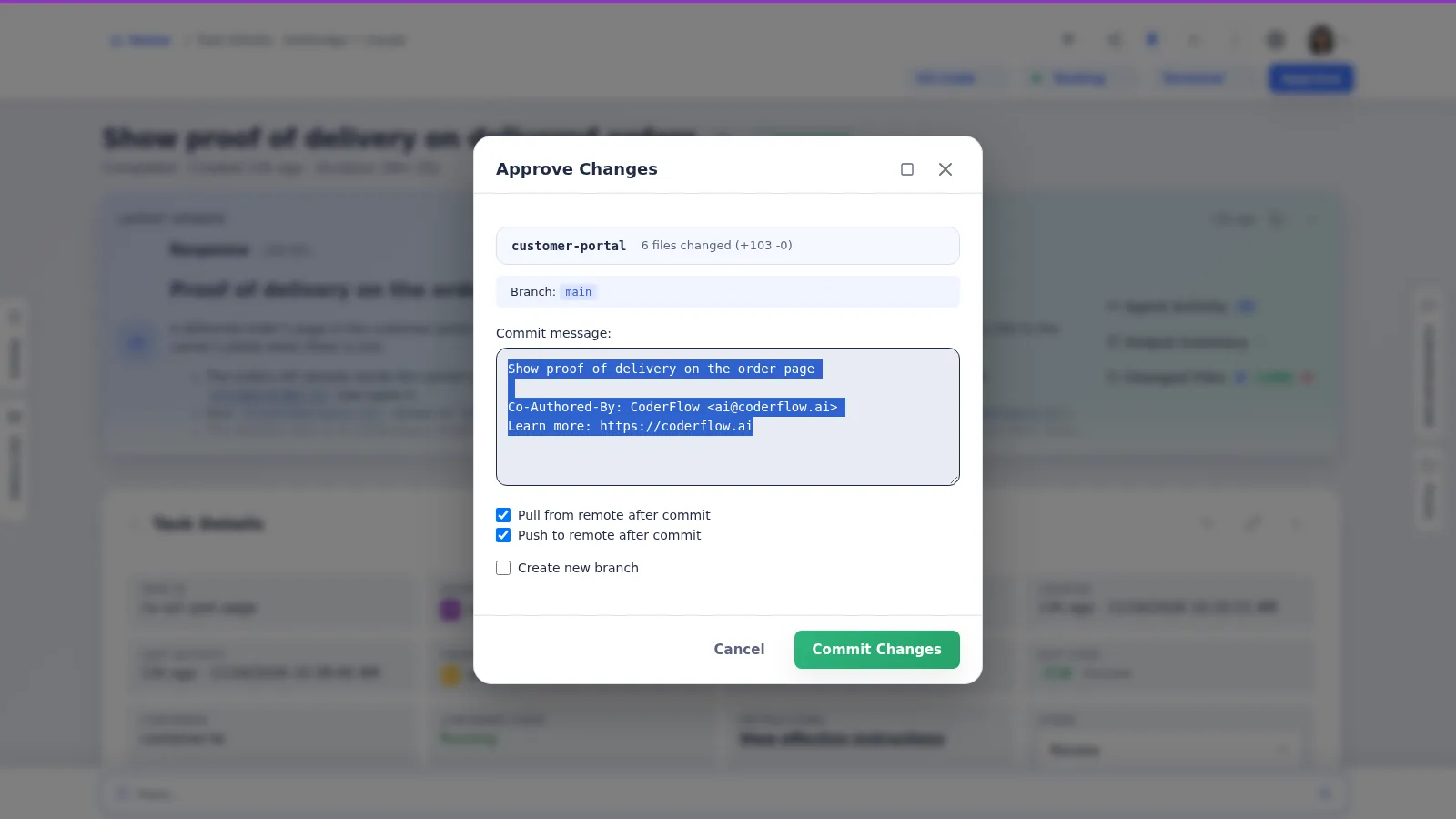
Ready to commit means a developer can understand what changed and why, and approve it without reconstructing the reasoning. The change must be complete, properly scoped and produced against the real environment.
Where the toolchain runs in CoderFlow's Linux environments or on a build host IT connects, agents build and test changes with it. Otherwise they prepare changes your team builds and tests. A change that only passed tests in a generic sandbox has met the bar of plausible, and those are not the same thing.
Why This Standard Matters for Enterprise Teams
Enterprise teams are not short on code. The constraint is completing work to a standard the team can trust, so what you're buying is the capacity to close work, not more code.
Ask of any AI coding tool: at the end of a task, what exactly do I have, and what work is still mine? With an agent on its own, checking the change against your real system and taking it to release is usually still yours.
Holding AI to a Higher Standard
CoderFlow agents run the full build, test and fix loop inside your infrastructure, against your real systems, until the acceptance criteria are met. Developers review completed work and approve every change, with a full record of who approved what. See change management for AI, or explore CoderFlow on your system.
Want to see verified, ready-to-commit outcomes on your own system? Talk to sales or start with a Reimagine engagement.
Questions
What Does Verified, Ready-to-Commit Mean for AI-Generated Code?
In CoderFlow, it means the change was built, tested against defined acceptance criteria and checked in the real environment. It arrives with a task summary, the full diff and build and test output, including screenshots where the change affects a screen.
How Does CoderFlow Verify a Change Before a Developer Reviews It?
CoderFlow agents run the build-test-fix loop in their own container until the acceptance criteria are met, with Playwright and Chromium built in and App Server previewing the running application. Where a toolchain isn't available, agents prepare changes your team builds and tests.
What Happens When a Developer Approves a CoderFlow Change?
CoderFlow commits it, optionally to a new branch with a pull request on GitHub or Azure DevOps, and records who approved, when, the commit message, the commits per repository and the push status. The full task history stays available after the container is removed.