
Uniface, Magic and Clarion With CoderFlow
Model-driven and template-generated business applications that general tools struggle to read.
Start with one defined workflow on the systems you already run, then expand as it proves itself.
! Clarion: UpdateCustomer procedure, OK button
  OF ?OK
    IF CUS:CreditLimit > 50000 AND ~GLO:UserIsManager
      MESSAGE('Limits over 50,000 need manager approval')
      SELECT(?CUS:CreditLimit)
      CYCLE
    END
    Access:Customer.Update()
POST(EVENT:CloseWindow)Only managers, enforced on the Update Customer screen. Limits set through the import procedure skip this check.
Illustrative example with synthetic code.
Running on Uniface, Magic, Clarion Today
Model- or repository-based development that general tools can't read.
Very few people know these platforms today.
Logic generated from templates that nobody has documented.
What CoderFlow Does for Uniface, Magic, Clarion
Documentation and Q&A
Self-maintaining documentation of your Uniface, Magic and Clarion applications, and plain-language answers with sources for business users and developers.
Impact Before Change
See which programs, files and screens a change will touch before anyone starts.
Changes Prepared by Agents
Agents prepare changes in isolated containers. Your team builds and tests them with its existing toolchain, then approves.
Into Git, Reviewed Forever
Export application source or models to text where your tools allow, and keep the exports in Git.
Documentation From What You Can Export
CoderFlow documents the application from exported source and models, and explains its rules in plain language.
Plan the Path Forward
Agents can rebuild screens and logic on a modern stack in stages, using the documentation as the spec.
Answers About Your Uniface, Magic, Clarion System, Without a Ticket
With CoderFlow for Business, people in operations, finance and customer service ask how the system works and get answers drawn from its source code and documentation, with sources. Reports can pull data through web APIs your IT team makes available, and requests reach IT with the context attached.
Explore CoderFlow for Business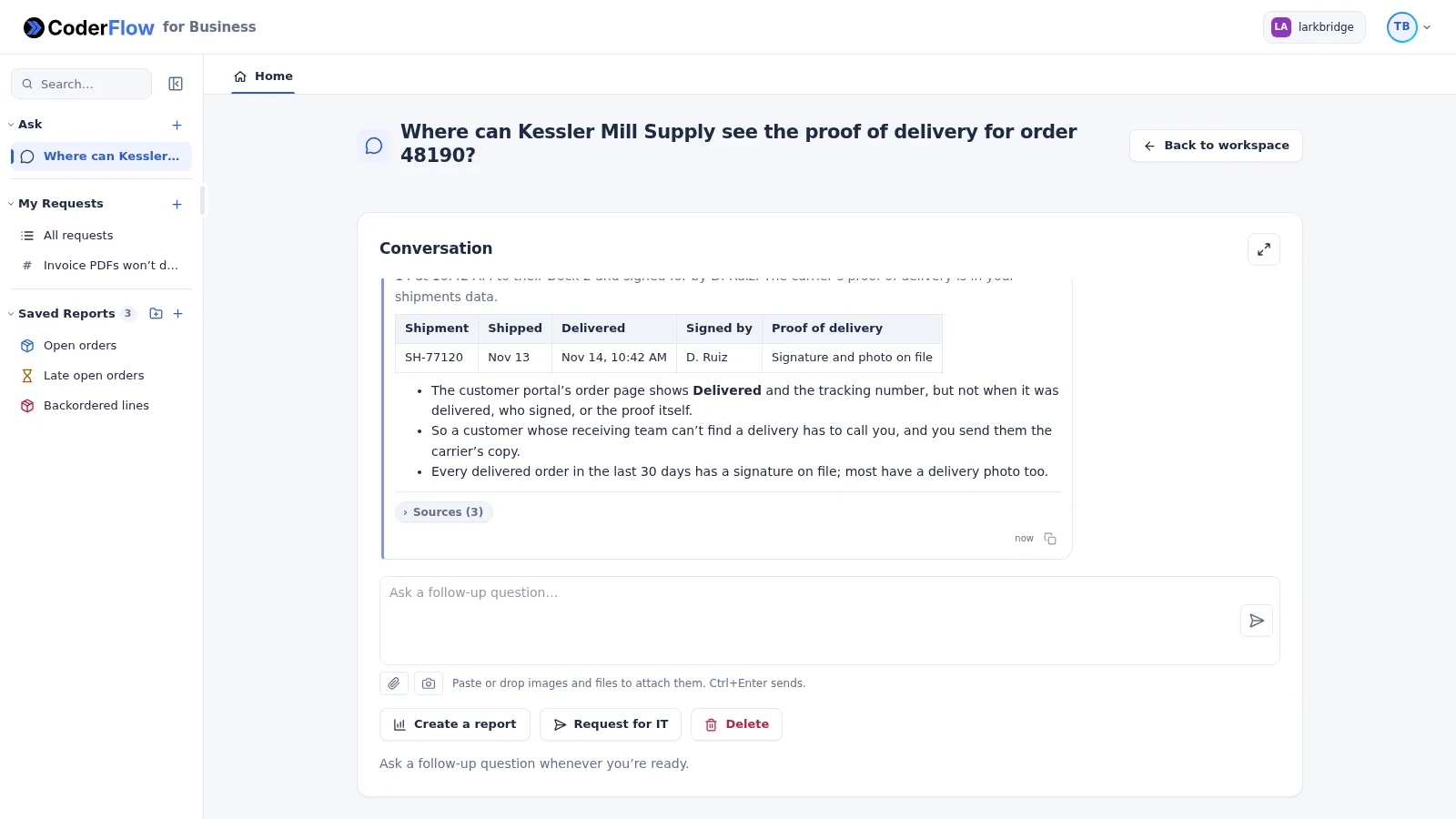
How It Connects
Agents work on exported source in Linux containers. Building uses your Uniface, Magic or Clarion tooling.
Keep It, or Move Forward
Understand the application completely first. Then decide whether to keep extending it or rebuild it in stages.
A Spec Written From the System Itself
IT needs to replace a Magic application but has no documentation. CoderFlow writes a functional spec from the exported application, and agents rebuild the first module against it, reviewed by the team.
Walkthroughs for your system are coming. Meanwhile, explore CoderFlow on a web app, or see how it works in the 2-minute quick look.
Uniface, Magic, Clarion Questions
Can CoderFlow Read Uniface, Magic or Clarion Applications?
CoderFlow documents Uniface repository exports, Magic xpa XML sources, and Clarion .clw source or .txa text exports kept in Git. It explains screens, procedures and rules in plain language, and can write a functional spec when no other documentation exists.
How Does CoderFlow Build Changes for Uniface, Magic or Clarion?
Agents change exported source in Linux containers, but building uses your Uniface, Magic or Clarion tooling, and Clarion and Magic development are Windows-based. Your team imports, builds, tests and approves the changes, while modules rebuilt on a current stack are built and tested inside CoderFlow.
Can Business Users Ask CoderFlow How Our Uniface, Magic or Clarion Application Works?
In CoderFlow for Business, Ask answers plain-language questions from the exported source and documentation, with sources listed, and can hand an answer off as an IT request. Databases behind these applications can feed reports through web APIs your IT team exposes.
Can CoderFlow Rebuild Our Uniface, Magic or Clarion Application?
CoderFlow agents can rebuild screens and logic on a current stack one module at a time, using the generated documentation as the spec, with your team reviewing every change. Nothing is converted automatically.
We Have No Documentation for Our Uniface, Magic or Clarion App. Where Do We Start?
Start by having CoderFlow turn the exported application into readable documentation your team can check. Then talk to sales about the full platform, or a Reimagine engagement to choose the first module to rebuild.
Is a Uniface, Magic or Clarion App a Legacy System, and Can CoderFlow Modernize It Without a Rewrite?
CoderFlow works on what you already have: from exported source or models, it documents screens, procedures and rules, and agents prepare changes your team builds and tests with its own tooling. When a module is ready to move, agents rebuild it against that documentation.
Industries where we often see Uniface, Magic, Clarion
Bring AI to Your Uniface, Magic and Clarion Applications.
Talk to sales about your setup, or start with a Reimagine engagement.