
VB6 and Delphi With CoderFlow
Windows desktop applications with years of business rules in forms, modules and stored procedures.
Start with one defined workflow on the systems you already run, then expand as it proves itself.
' frmOrder.frm - credit check before release
Private Sub cmdRelease_Click()
    Dim rs As ADODB.Recordset, sql As String
    sql = "SELECT CreditLimit, Balance FROM Customer" & _
        " WHERE CustNo = " & txtCustNo.Text
    Set rs = gConn.Execute(sql)
    If rs!Balance + CCur(txtTotal) > rs!CreditLimit Then
        If GetSetting("OrderEntry", "Rules", _
            "DistOverride", "N") <> "Y" Then
            MsgBox "Held: over credit limit", vbCritical
            Exit Sub
        End If
    End If
    ReleaseOrder txtOrderNo.Text
End SubRelease compares the customer's balance plus this order to the credit limit. Over the limit, the order is held, unless the DistOverride registry setting is Y on that PC. So the rule behaves differently from one workstation to the next.
Illustrative example with synthetic code.
Running on VB6 and Delphi Today
The people who built it have moved on, and VB6 or Delphi experience is hard to hire.
Business rules hide in form event handlers, registry settings and stored procedures.
Every change depends on a Windows build machine someone has kept alive for years.
What CoderFlow Does for VB6 and Delphi
Documentation and Q&A
Self-maintaining documentation of your VB6 and Delphi applications, and plain-language answers with sources for business users and developers.
Impact Before Change
See which programs, files and screens a change will touch before anyone starts.
Changes Prepared by Agents
Agents prepare changes in isolated containers. Your team builds and tests them with its existing toolchain, then approves.
Into Git, Reviewed Forever
.frm, .bas, .cls, .pas and .dfm files are text, so they go into Git as they are. Binary resources sit alongside them.
Find the Rules Hiding in the Forms
CoderFlow traces business rules across forms, modules, stored procedures and configuration, so you see what a change will affect before anyone touches the code.
A Path Forward, on Your Terms
Keep the application and extend it, or have agents rebuild screens as web pages one module at a time while the database stays put.
Answers About Your VB6 and Delphi System, Without a Ticket
With CoderFlow for Business, people in operations, finance and customer service ask how the system works and get answers drawn from its source code and documentation, with sources. Reports can pull data through web APIs your IT team makes available, and requests reach IT with the context attached.
Explore CoderFlow for Business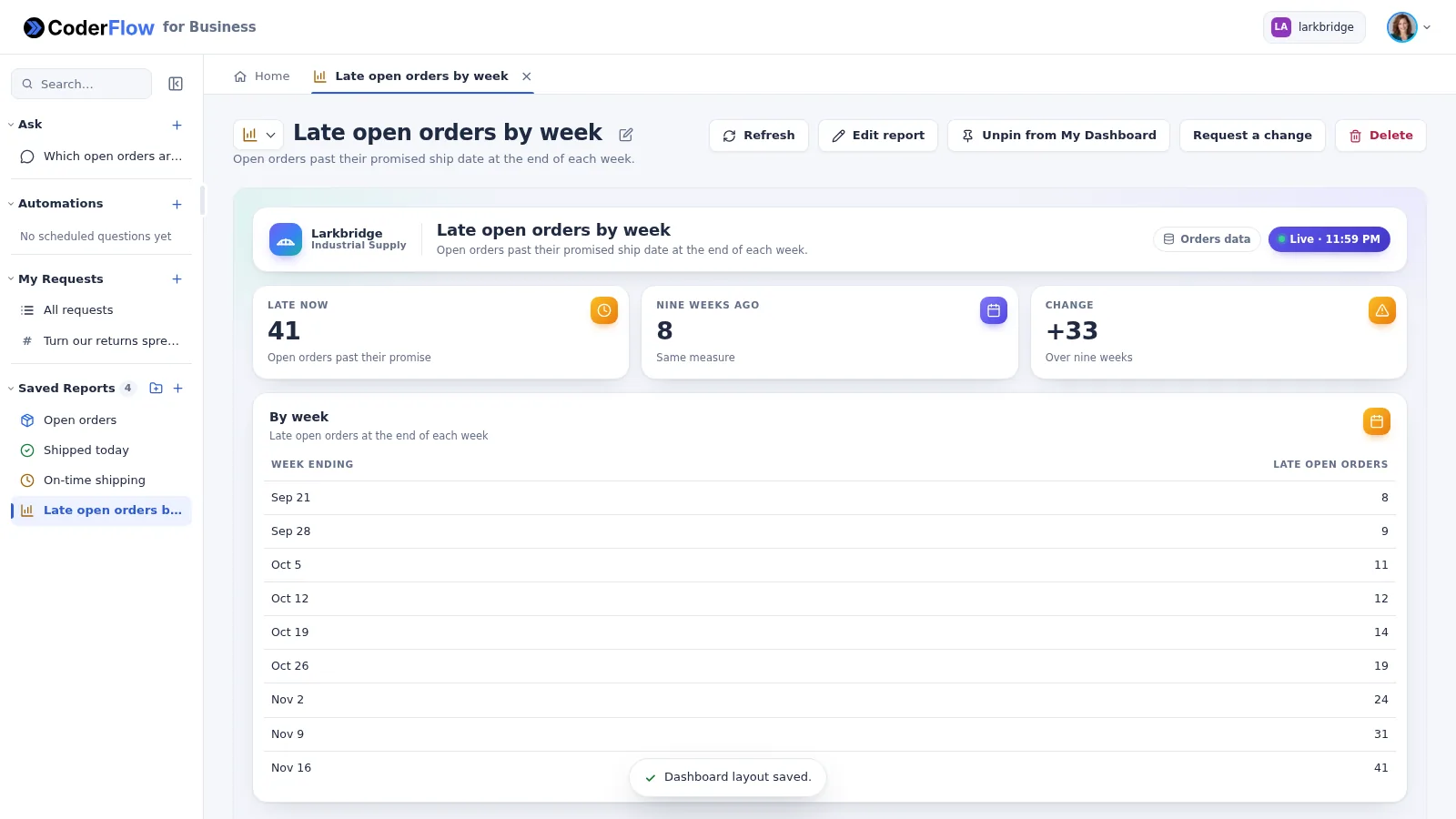
How It Connects
Source comes from your repository or file share. Agents work in Linux containers, so compiling VB6 or Delphi uses a Windows build machine your team runs.
Keep It, or Move Forward
Most teams keep the application running and add to it. When a module is ready to move, agents can rebuild it as a web application against the same database, screen by screen.
Order Entry, Explained and Fixed
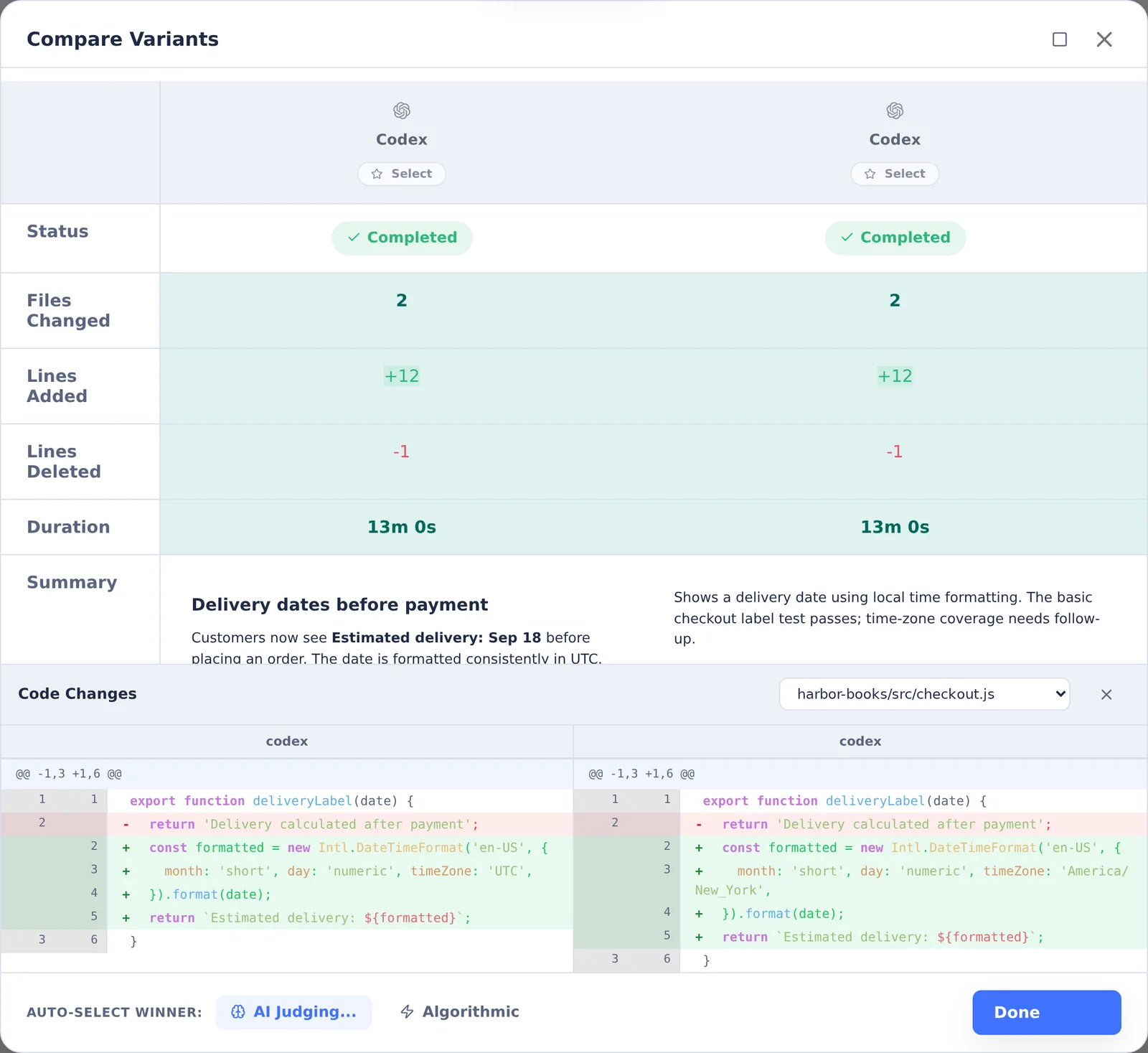
A distributor's VB6 order-entry app holds orders inconsistently. CoderFlow's answer points to a per-workstation registry override, and an agent moves the rule into the database and documents it. A developer builds, tests and approves the change.
Walkthroughs for your system are coming. Meanwhile, explore CoderFlow on a web app, or see how it works in the 2-minute quick look.
VB6 and Delphi Questions
Can CoderFlow Document and Change a VB6 or Delphi Application?
CoderFlow documents VB6 files (.frm, .bas, .cls) and Delphi files (.pas, plus .dfm forms saved as text), including logic in event handlers, registry settings and stored procedures. It keeps that documentation current and prepares code changes for your team to review.
How Does CoderFlow Connect to VB6 and Delphi Code, and Who Builds It?
CoderFlow clones your repository from Git into an environment, so code on a file share is committed first. The VB6 and Delphi toolchains are Windows-only and agents work in Linux containers, so your team builds and tests the prepared changes on your Windows build machine before approving.
Can Business Users Ask CoderFlow How a VB6 or Delphi Application Works?
In CoderFlow for Business, Ask answers plain-language questions from the source code and documentation, lists its sources, and can turn an answer into an IT request. Data behind a desktop app, such as SQL Server or Access, can feed reports through web APIs your IT team exposes.
Is VB6 or Delphi a Legacy System, and Can CoderFlow Modernize It Without a Rewrite?
CoderFlow works on what you already have, with no migration and no starting over: it documents forms, modules and rules, and agents prepare changes your team builds and tests on Windows. If you decide to move, agents can rebuild modules as web apps one at a time against the same database.
How Do We Get Started With CoderFlow for a VB6 or Delphi Application?
Commit the source to Git and ask CoderFlow to document one module, a quick way to see how well agents understand your code. Then talk to sales about the full platform, hosted on CoderFlow Cloud by Profound Logic or self-hosted.
Where Does Our VB6 or Delphi Source Code Go When CoderFlow Works on It?
It stays on the server you choose: your own Linux server, on premises or in your cloud, or CoderFlow hosted by Profound Logic. Each task runs in its own isolated container, AI requests go only to the providers IT configures, and a person approves every change.
Industries where we often see VB6 and Delphi
Bring AI to Your VB6 and Delphi Applications.
Talk to sales about your setup, or start with a Reimagine engagement.