One place for all your AI

All Your AI. All Your Systems. One Governed Platform.

Connect all your AI tools and systems in one place. Business users and developers put AI to work, and IT keeps it governed and secure.

  • Connect once, then every team uses the same AI, connections and rules
  • Developers and business users together, under one sign-in and IT's governance
Take the Tour Hands-on walkthroughs with sample data
YOUR AIYOUR SYSTEMSOne governed platformClaudeCodexGeminiIBM BobGrokKimiDatabasesApplicationsMicrosoft 365Slack · TeamsGitHubYour own appsDevelopersBusiness usersIT

Governed · Standardized · Secured

The problem

AI Is Everywhere in Your Company.
Control Isn't.

Too Many Tools

A login and a bill for every AI vendor.

Cut off From Your Data

So people paste company data into chatbots.

Different Every Time

Everyone prompts their own way.

Invisible to IT

No record of who used what, on which data.

Customer story · Scoular

Business Asks the System Directly. IT Holds the Guardrails

“Not only can your developers use it, but your business analyst or your project manager or your data analytics team can actually go in and ask the system and get the columns and all the characteristics they need.”

Brad McDaniel, IT Manager, CTRM and Application Delivery, Scoular

Read the Scoular Story →
14x

productivity gain, by Scoular's IT manager's measure

See it in action

A Business Question Becomes a Tested, Approved Change.

One request, three AI agents, one place, all in the real CoderFlow app.

  1. 01

    Business Asks

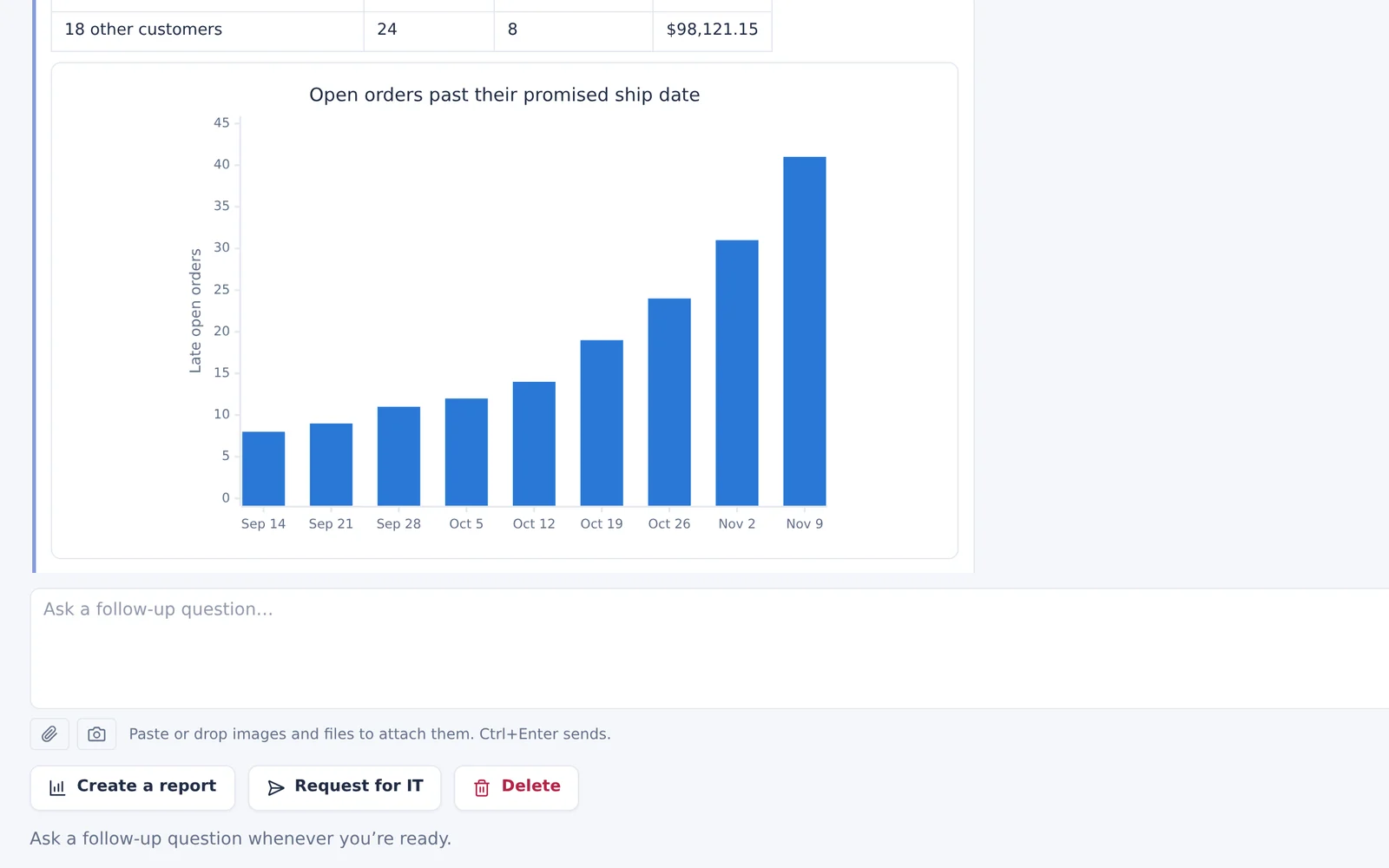
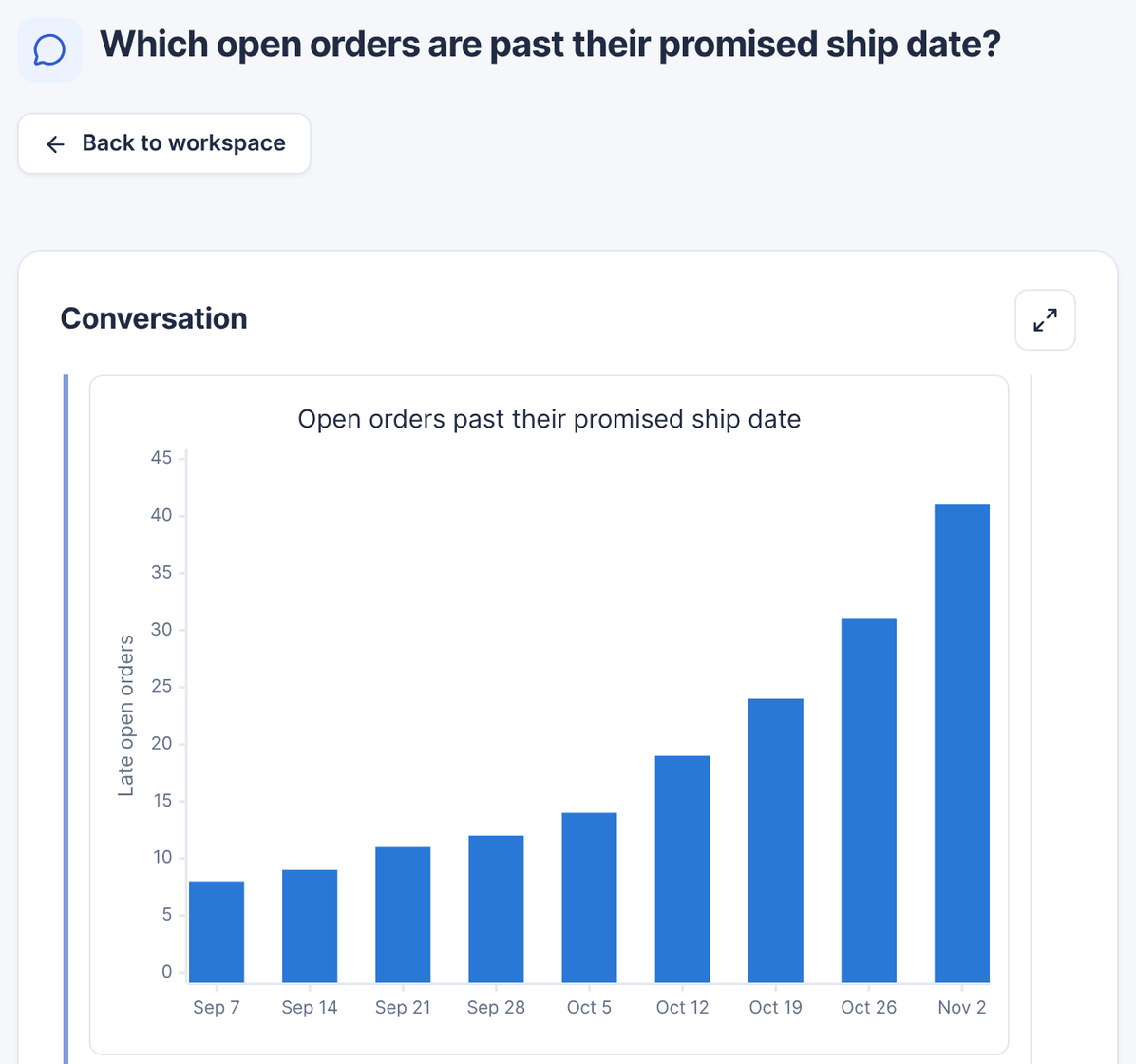
    Operations asks which open orders are past their promised ship date, in plain words. The answer comes back with a chart and every source behind it, and one click sends IT a request with the conversation attached.

    A CoderFlow for Business answer: a chart of open orders past their promised ship date, with Create a report and Request for IT
  2. 02

    Agents Build

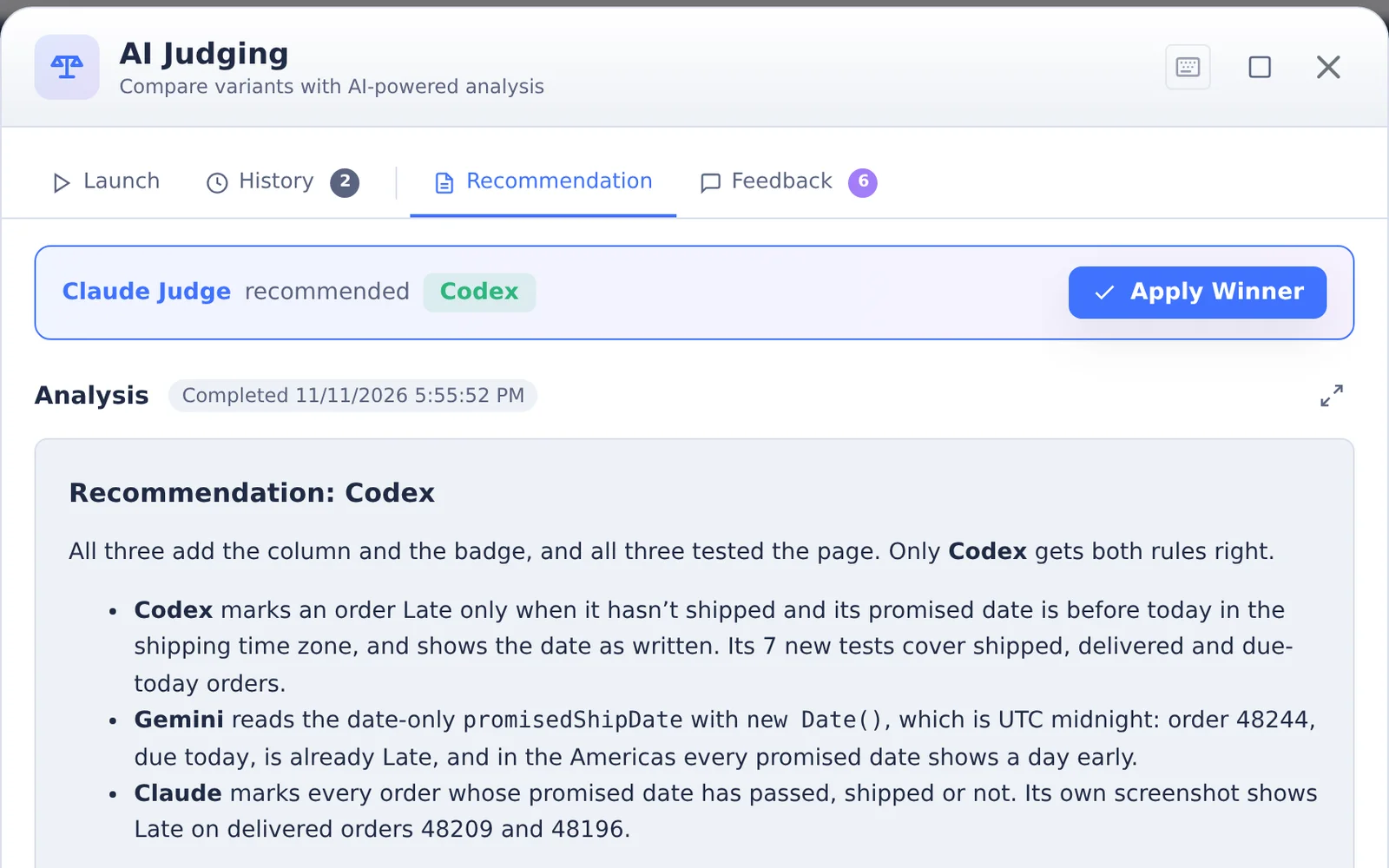
    Claude, Gemini and Codex build the change at once, each in its own container, and each tests it in a real browser. AI judges compare the three without knowing which agent wrote which, and explain their pick.

    AI Judging in CoderFlow: the Claude judge recommends Codex and explains what each agent got right and wrong
  3. 03

    IT Approves

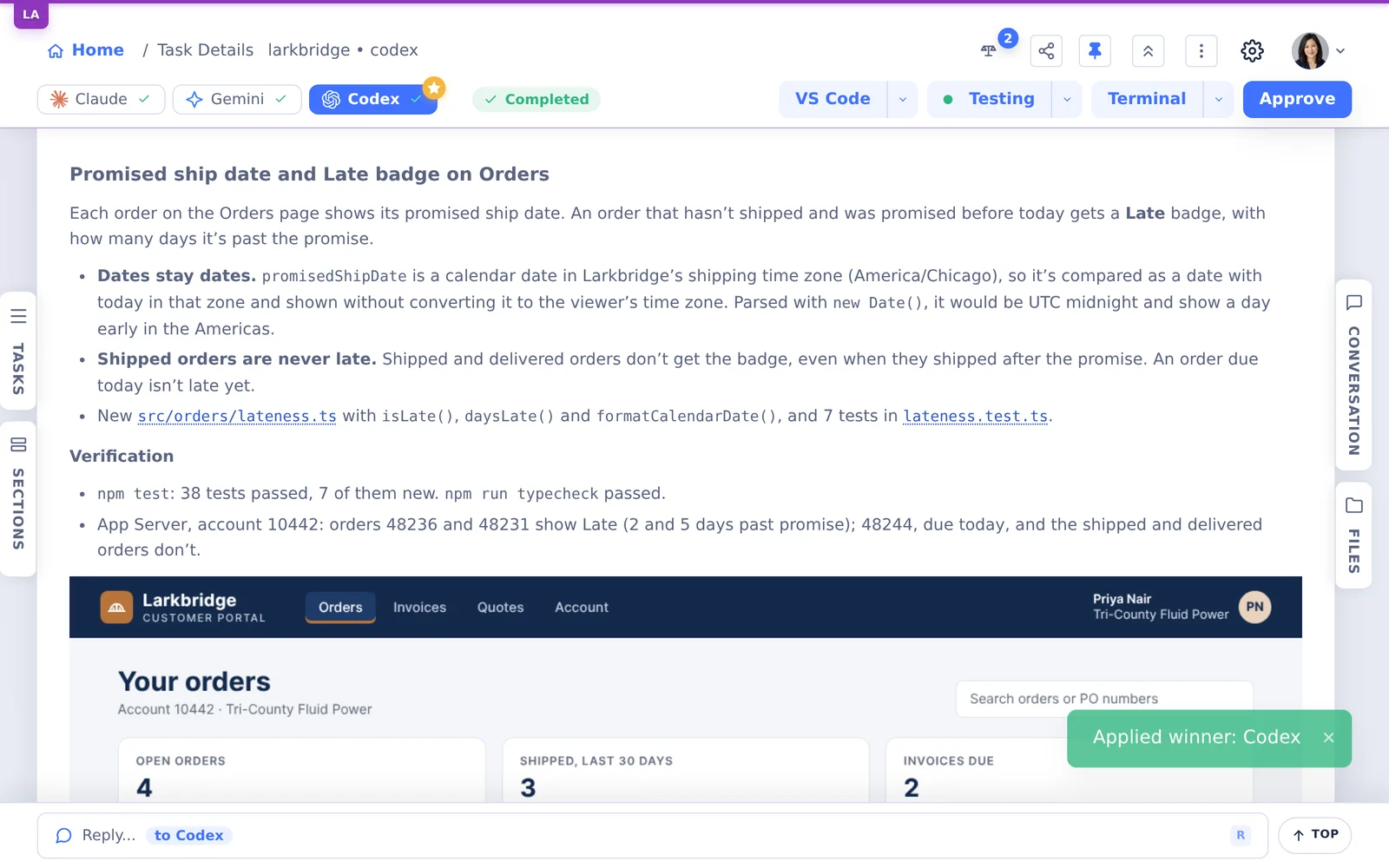
    IT reviews the winner's code, test results and screens, then approves it. Only then is the change committed, and the person who asked tries it and accepts it.

    The winning change in CoderFlow, with its output summary, test results and the Approve button

Demonstration data · Fictional company

CoderFlow in One Minute

Transcript: CoderFlow in one minute

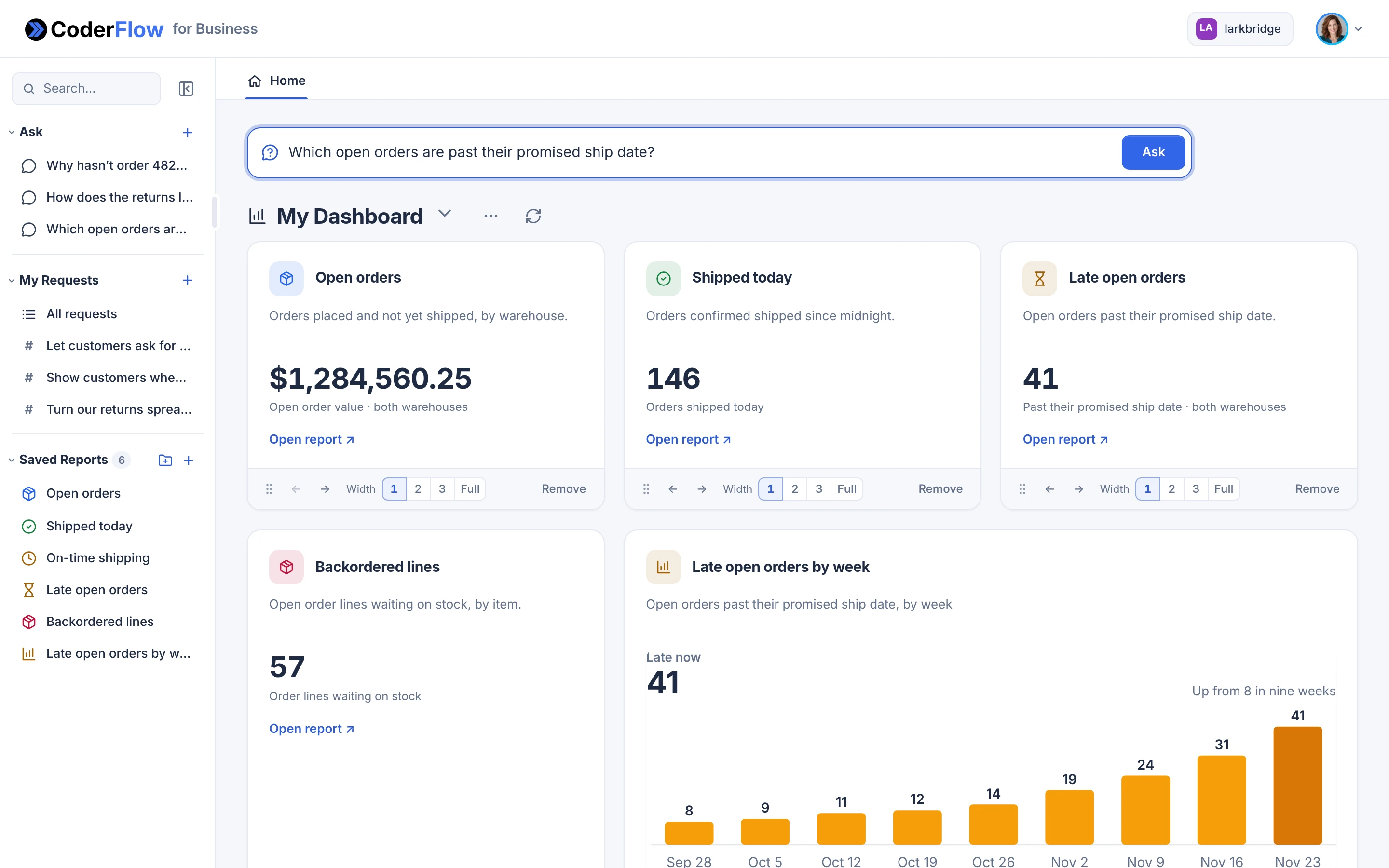
[Erin, in sales operations, is typing a question into the Ask bar of CoderFlow for Business: "Which open orders are past their promised ship date?"]

It starts with a question from the business.

[Erin's home in CoderFlow for Business: her question in the Ask bar, above her dashboard tiles (open orders $1,284,560.25, 146 shipped today, 87% on-time shipping). She presses Ask.]

Then agents build, and IT approves what ships.

[Minutes later, Erin's answer in CoderFlow for Business, from Larkbridge's own order data through the connection IT set up: the chart "Open orders past their promised ship date", climbing from 8 to 41 over nine weeks; the last bar is circled.]

At Larkbridge, forty-one orders are late,

[Down Erin's answer, its sources: the order data it read, and "Customer portal: Orders page · Application · Shows each order's status and total, not its promised ship date" (circled).]

and customers can't see when theirs will ship.

[Under the answer, the real Request for IT button; the pointer presses it.]

So Erin sends it to IT,

[IT's side of the request, its Reviewed context: "Which open orders are past their promised ship date? · Recorded by CoderFlow from an Ask conversation · captured Nov 4, 2026, 10:05 AM".]

with the whole conversation attached.

[IT's task board about ten minutes after Erin's request: the request's task, "Show the promised ship date and a Late b…", is already running, with Claude, Gemini and Codex at work under the Request intake pill. Its last update was 8 minutes ago.]

Agents start on it automatically,

[The request's task, "Show the promised ship date and a Late badge on each order", open on three agents' tabs, Claude, Gemini and Codex, each still running: Running · Created 9m ago · Duration 9m 30s.]

each in its own container,

[Half an hour later, the same board: the request's task is finished, Claude's, Gemini's and Codex's marks checked, under the Request intake pill, ready for IT to review.]

so IT gets work that's ready to review.

[The chosen version's own report, under Verification: "npm test: 38 tests passed, 7 of them new."]

Every version runs the team's tests,

[Under it, the browser screenshot that version took of the Orders page: order 48236, promised Nov 2, "2 days past promise", Partly shipped, Late.]

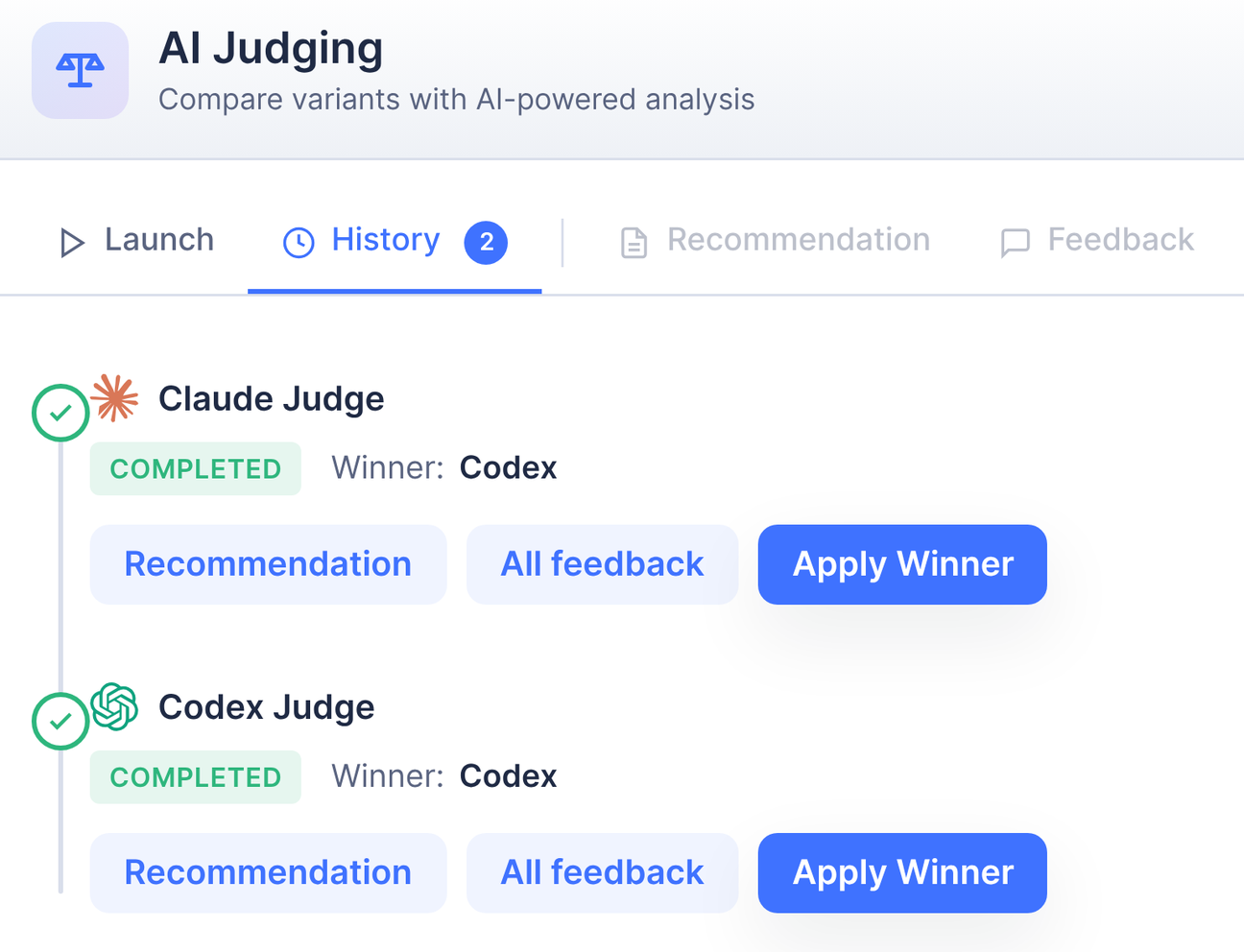
[AI Judging on the three versions: Claude Judge, Completed, Winner: Codex; Codex Judge, Completed, Winner: Codex. That is the result on this task.]

and AI judges compare them,

[The second judge's row: Codex Judge, Completed, Winner: Codex.]

[One version of the Orders page, running in its own App Server, that was not chosen: a shipped order and a delivered order still carry a Late badge. Shipped · Late on order 48217 is circled: caught before review.]

and the evidence catches one that flags shipped orders.

[The chosen change's Task Details after Maya's approval, framed on two fields only: Duration 28m 0s, and Approved by Maya Chen · now, with the approver's name circled.]

Then Maya in IT approves the change,

[IT's Deploy dialog, "Select a deployment profile to run:", with deploy-customer-portal chosen, "Deploy customer portal to production (portal.larkbridge.example)". Maya presses Deploy. Nothing has been deployed yet.]

then runs the deployment IT set up,

[36 seconds later, the end of that deploy task's log, completed: the health check, HTTP 200, and "Deployed to https://portal.larkbridge.example".]

and every run is recorded.

[The deployed customer portal at portal.larkbridge.example after that run, at phone width. Order 48231 shows its promised ship date, Oct 30, "5 days past promise" (circled). The page moves down past its Late badge to the next order, 48217: promised Oct 23, Shipped, with no Late badge.]

Now customers see every promised date,

[That afternoon, back in CoderFlow for Business, Erin's request "Show customers when their orders will ship": REQ-000142 · Resolved · "You accepted the result."]

and Erin accepts the result.

[End card: CoderFlow logo, "Business Asks. Agents Build. IT Approves." and the disclosure.]

Business asks. Agents build. IT approves.
See it end to end

The Whole Flow, in One Minute

A business user asks which orders are running late and gets the answer with its sources. Several agents build the fix in parallel, AI judges pick the strongest result, and IT approves it.

Or Take the 2-Minute Quick Look →
Across your business

AI in Every Department, Under One Set of Rules.

Each team puts agents to work on the jobs that cost it the most time, on the data and systems it already uses. A person checks the result before it counts.

Developers and business users

One Place for the Business
and for IT.

Business users don't just file tickets. They put agents to work on their own data and processes, within the security and governance IT sets.

See the Future of Your Systems →

What Both Teams Share

Governance in IT's Hands

Nothing is on until IT turns it on. IT sets roles, chooses the AI and sees every business user's AI run.

Security Built In

People see only the data their role allows. Logins are encrypted and never reach the AI, and agents work in isolated containers.

Collaboration in One Thread

A request carries the screen, data and conversation, and every change links back to the person who asked.

Business and IT, working together

See How the Work Gets Done.

Business users direct agents, build reports and request changes with the context attached. IT hands the build to agents, compares the results and approves what ships. Both work in the same place.

CoderFlow for Business

Tell an Agent What You Need

  • Business users give agents instructions and refine the results
  • Ask questions, build reports and automate recurring work
  • Use connected applications and data within your permissions
Explore CoderFlow for Business →
CoderFlow for Business answering “Which open orders are past their promised ship date?” with a bar chart of late open orders by week, rising from 8 on Sep 7 to 41 on Nov 2.
41 open orders are past their promised ship date, up from 8 in early September. Demonstration data · Fictional company
Agentic coding

Turn the Request Into Working Software

  • Give the change to several AI agents at once
  • Agents build and test, including checks in a real browser
  • AI judges compare the attempts and explain their recommendation
Explore Agentic Coding →

Demonstration data · Fictional company

Testing

See the Evidence Before You Approve

  • Agents run your builds and tests and fix what fails
  • Browser checks include screenshots of the result
  • Review findings and send feedback for another round
Explore Testing →

Demonstration data · Fictional company

Change management

From a Business Request to an Approved Change

  • Review the code, test results and agent conversation together
  • Approve a commit, branch or pull request into your release process
  • The requester tries the result and accepts it
Explore Change Management →

Demonstration data · Fictional company

Documentation and system knowledge

Keep the Knowledge in Your Business

  • Document the rules in your existing code
  • Ask how a process works and see its sources
  • Investigate the impact of a proposed change
Explore Documentation and System Knowledge →

Demonstration data · Fictional company

Connect your AI tools

Every Agent You Use. One Set of Controls.

Run Claude Code, Codex, Gemini, IBM Bob, Grok and Kimi side by side on your own subscriptions. Compare them on your real work, and switch without starting over.

Connect Your AI Tools → How CoderFlow Works With Coding Assistants →

AI Judging history in CoderFlow: a Claude judge and a Codex judge both completed and both chose the Codex variant as the winner.
AI judging history · Demonstration data · Fictional company
One change

Several Agents, Compared for You

Send one change to several agents at once. AI judges compare the attempts and explain their pick, and a person approves the winner.

Explore Agentic Coding →
Hundreds of tasks

One Template, Hundreds of Programs

Tasks queue and run in parallel within the limits IT sets, then come to people for approval with the evidence attached.

Run One Change Across Hundreds of Programs →
Where your teams already work

One Place, Reachable From Everywhere.

Nobody has to learn a new tool to put agents to work. Business users start from the browser, chat or email. Developers stay in their editor and terminal.

Web App

The whole platform in any browser, for business users and IT.

Your Phone

Review an agent's work, read the diff and approve it from your phone.

Slack and Microsoft Teams

Start work and check on it from the channel you already use.

Outlook

Start a task from the email you're reading, once an admin turns it on.

Webhooks

Start tasks when something happens in another system.

VS Code

Work from a VS Code extension, or open VS Code inside any task.

Command Line

Start and script tasks from the CoderFlow CLI.

CoderFlow Link

Connect folders on your own computer to an agent's task.

Governed. Standardized. Secured.

One Set of Rules for All Your AI.

On CoderFlow Cloud or your own servers.

Governed

  • Roles and single sign-on
  • A person approves every change
  • Usage by team and user

Standardized

  • One shared skills library
  • Task templates
  • Default models per environment

Secured

  • Isolated containers
  • Encrypted credentials
  • Your cloud or your servers

Answers show their sources. Your team validates business definitions and results; agreement between agents is not proof that an answer is right.

Before you start

Your Systems. Your Questions.

Start with one real problem and expand when it proves useful.

Plan Your First Workflow With Our Team →
Does CoderFlow Replace ChatGPT, Copilot or Gemini?

Not as a general chat assistant. CoderFlow is where AI does governed work on your systems: agents that build, test and change software, and business users who ask questions of their own data and send requests to IT. It runs coding agents from Anthropic, OpenAI, Google, IBM, xAI and Moonshot on the subscriptions you already have, and assistants such as GitHub Copilot, Cursor and Claude Desktop can hand work to CoderFlow through its MCP server. Keep the chat tools your people like; bring the work that touches your systems into one governed place.

What Does "Governed, Standardized and Secured" Mean in Practice?

Governed: IT turns each capability on, sets roles for each team and environment, signs people in through your identity provider, and a person approves every change. Standardized: agents share one skills library, task templates and default models, so the same request is handled the same way whoever asks. Secured: every task runs in its own container, credentials are stored encrypted, and business users see only the data their role allows. See AI governance and security.

We Already Use Claude Code or Codex. Why Add CoderFlow?

Keep them. They're already very good at writing code. CoderFlow runs them, alongside Gemini, IBM Bob, Grok and Kimi, under one set of controls and gives them what they need to finish the job: testing in an environment set up like yours, review and approval with the evidence attached, release through steps IT defines, connections to the applications and data you already run, and a place where business users direct agents and send IT requests. It also runs hundreds of tasks from one template, with review that keeps up. See how they work together.

How Does CoderFlow Connect Agents to Our Applications?

Through APIs, MCP tools and configured connections to data, applications and repositories. CoderFlow can also help build integrations for homegrown systems. The available tools and permissions determine what agents can do. See system connections.

Do We Have to Replace Our Homegrown Software?

CoderFlow works on the system you already run. Start with a report, workflow or software change there. CoderFlow can also help rebuild a specific part when it needs to move, while the rest keeps running.

How Does Work Get From Built to Production?

Agents build in their own containers and run your builds and tests, including checks in a real browser. AI judges compare the attempts. A person reviews the code, test output and screens, then approves a commit, branch or pull request. IT can define the deployment steps for each environment; running them takes permission, and every run is recorded. The business user who asked tries the result and accepts it. See change management.

How Much Work Can CoderFlow Take on at Once?

Hundreds of tasks. Run one template across hundreds of programs: tasks queue, run in parallel within the limits IT sets, get checked and judged, and come to people for approval with the evidence attached. For a single change, you can also send it to several agents at once and compare the results. See CoderFlow for IT.

Is Our System Too Old for AI?

CoderFlow works with .NET, Java and PHP applications as well as COBOL, VB6, PowerBuilder and other long-running systems. Depth varies by platform: where the toolchain runs on Linux, agents build and test their changes; for Windows-only tools such as VB6 and PowerBuilder, your team builds and tests what agents prepare. See what works on each platform.

What Business Results Does CoderFlow Deliver?

CoderFlow is built for business results, not AI for its own sake. Teams get answers from their own data with the sources shown, hand repetitive work such as weekly reports, retyping between systems and document preparation to agents, and get software changes out of the backlog, tested and approved. Start with one real problem, such as a report someone rebuilds by hand every week, and see what it saves before you expand. A Reimagine engagement proves it on one real problem in days.

Can Business Users Direct Agents Themselves?

Yes, within the limits IT sets. Business users ask questions of their data, build reports and dashboards by conversation, and build their own automations, just as IT does. When something needs a software change, they send IT a request with the context attached, then try the result and accept it. They can't do whatever they want: IT decides what's turned on, which data and applications each role can reach and which AI providers are used, and it can see every business user's AI run. IT doesn't have to direct every task, and software changes still go through review and approval. See CoderFlow for Business.

How Does CoderFlow Keep Business Users' Access Secure?

Business users see only the data IT makes available to their role. Where a system supports it, CoderFlow reads business data with the person's own login through read-only queries, and those logins are encrypted and never reach the AI. Nothing is on until IT turns it on for each environment and capability, and every business user's AI run is visible to IT. See security and governance.

Start with something real

Bring Your AI Under One Roof.

Start with one team, one system and the AI you already pay for. Add the rest when it proves itself.

Get the Platform

Put CoderFlow to work with your team, hosted for you or on your own servers. We'll walk through your systems and the setup you need.

Talk to SalesHow Pricing Works →

Start With Reimagine

Bring one defined business problem. Profound Logic's team builds and tests the solution with you, then hands it over with CoderFlow set up for your team.

Explore Reimagine

One Platform. Your Journey

You stay in control at every step.

1Prove ItOne real problem, solved in days.Start With Reimagine →
2ConnectYour AI tools, systems and know-how, set up on CoderFlow.About Starter Engagements →
3ExpandMore agents, more teams, more trust.See Customer Stories →
4One place for AIEvery team's AI, connected and governed in one place.See the Full Picture →
Talk to sales

Talk to Us About Your Systems.

Tell us what you run and what you'd fix first. We'll set up a conversation and a walkthrough on a system like yours.

Prefer email, or having trouble with the form? Contact our team directly.